
The scales — Part 3 — The Koi Doitsu
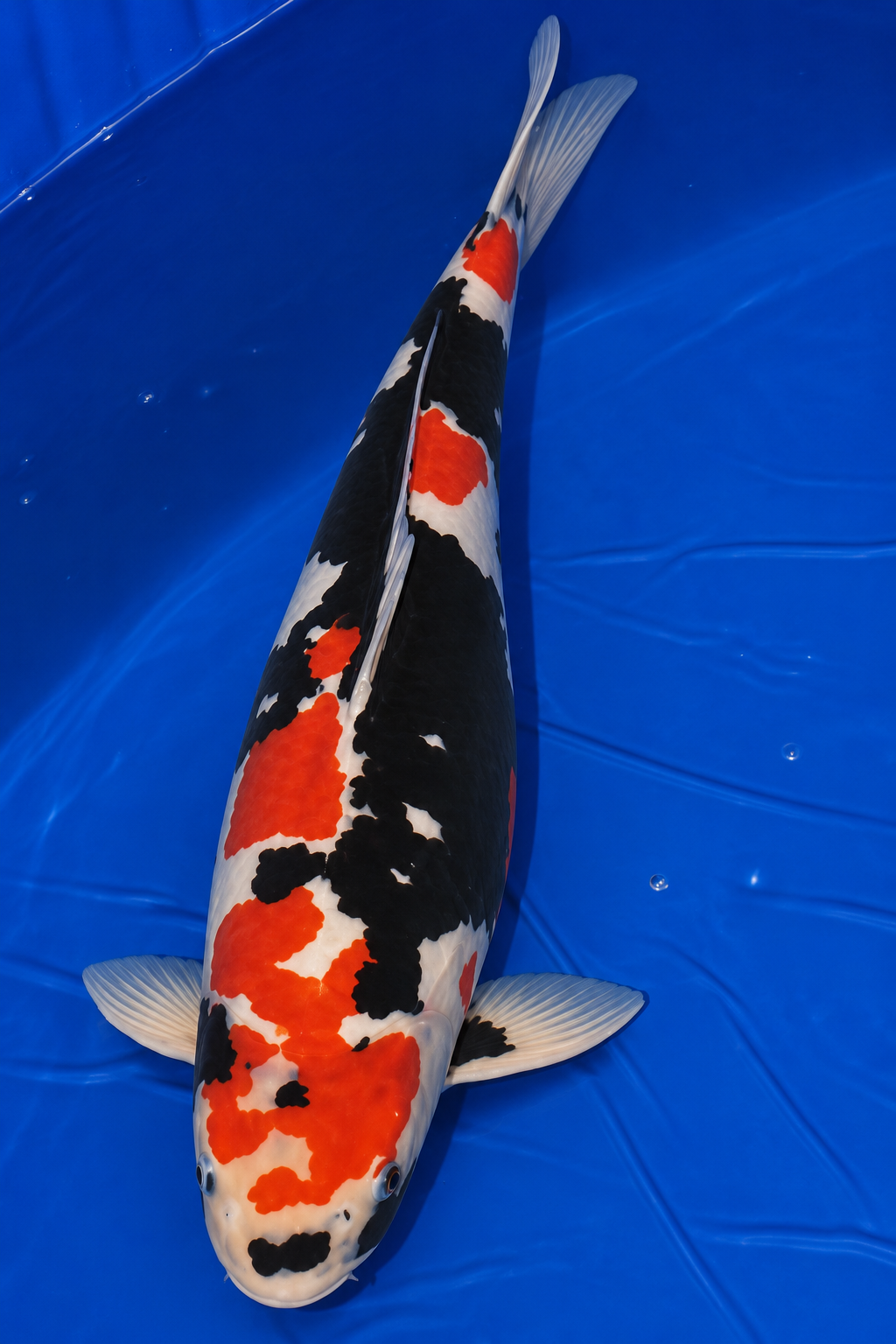
The scale part 3 The Koi "Doitsu" Doitsu, another term that is often heard when speaking of Koi variety, the word Doitsu is used as a prefix to the name of certain varieties such as: a Doitsu Kohaku or a Doitso Shiro Utsuri. Other varieties have the characteristic of being Doitsu like Shusui, Heisei Nishiki, Kumonryu...etc. Doitsu means "German" or "German carp" in Japanese. German carps were imported to Japan at first for purely food reasons, then these carps were crossed with Nishikigoi to bring us all the current Doitsu varieties. Below, the difference between a Doitsu Showa and a Showa Wagoi. A Doitsu Showa. A Showa Wagoi.
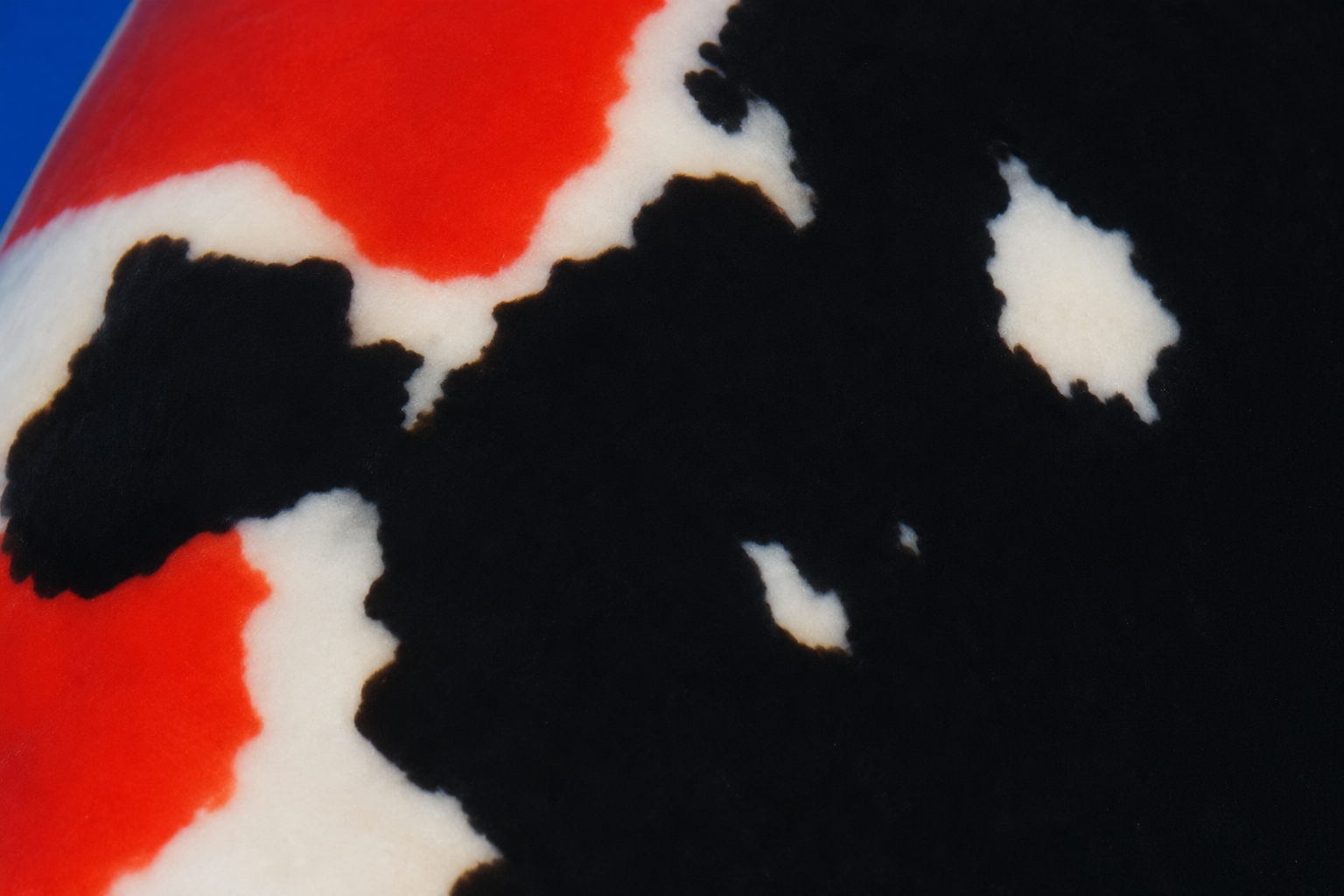
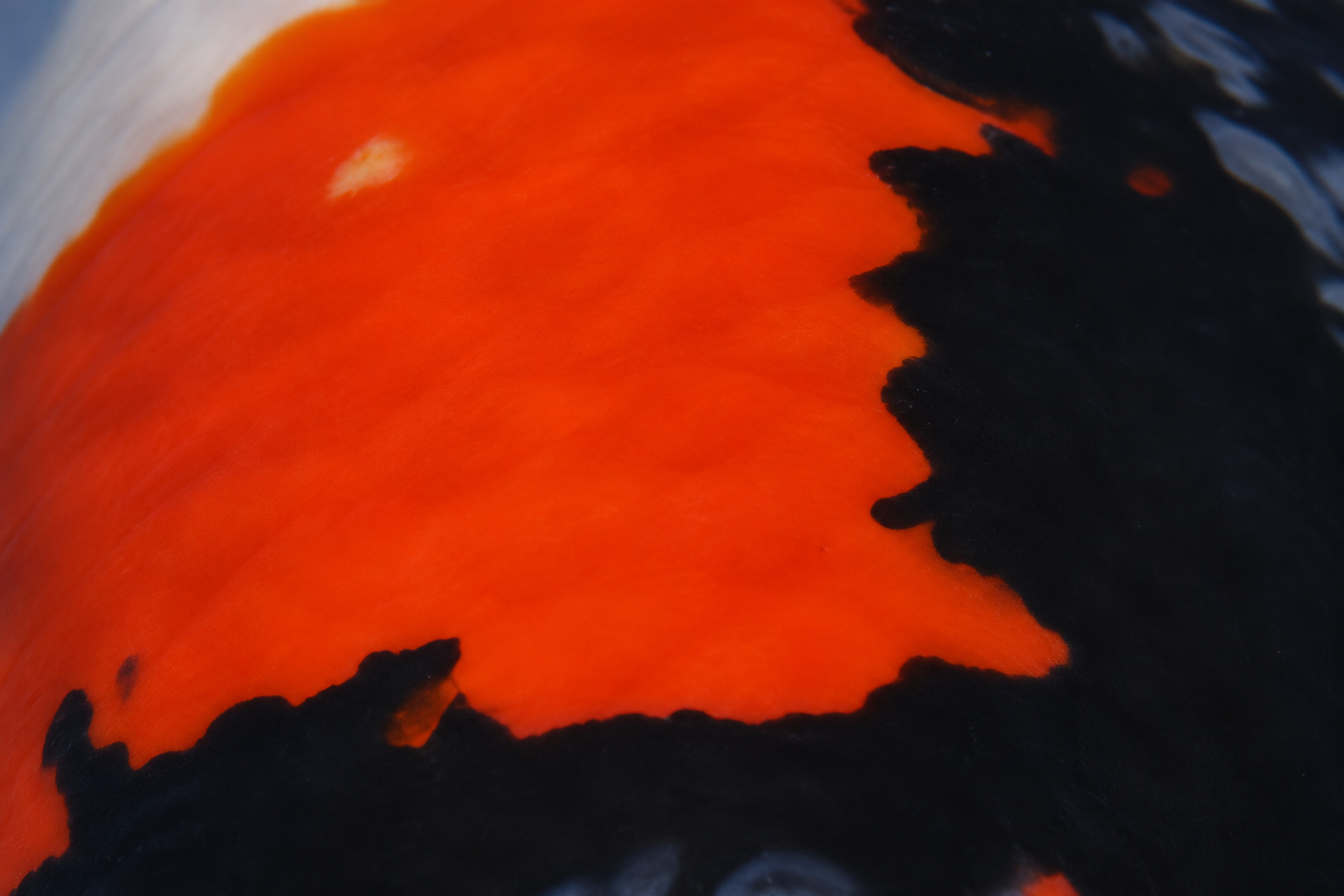
Often, a Koi Doitsu gives the impression of having the marks on the body more precise and the colors clearer than a Koi Wagoi because there is no influence of the Sashi. On the other hand, it may be missing the chandelier brought by the presence of scales, and of course, the Fukurin is not present on a Doitsu. If you look at the results of the Koi Show, you can notice that Doitsu varieties always lose in front of Koi Wagoi. The explanation is simple, judges take into account the fact that a beautiful deep coloring and a precise Kiwabian are more difficult to obtain with a Wagoi, although with a high quality Wagoi the marks are so precise that one does not discern scales. Another problem on the Doitsu is often the presence of one or more scales along the side line on the Kawagoi.
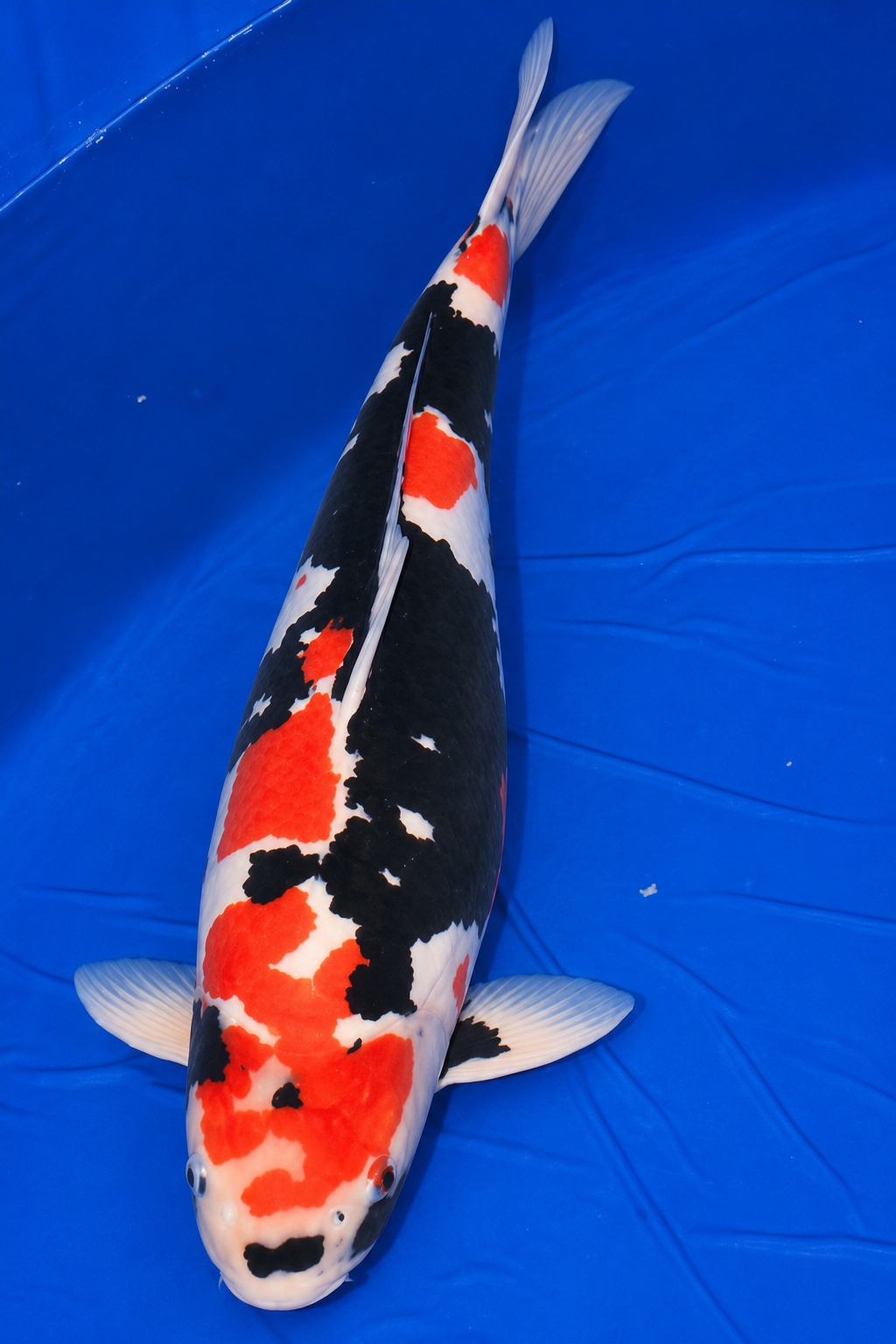
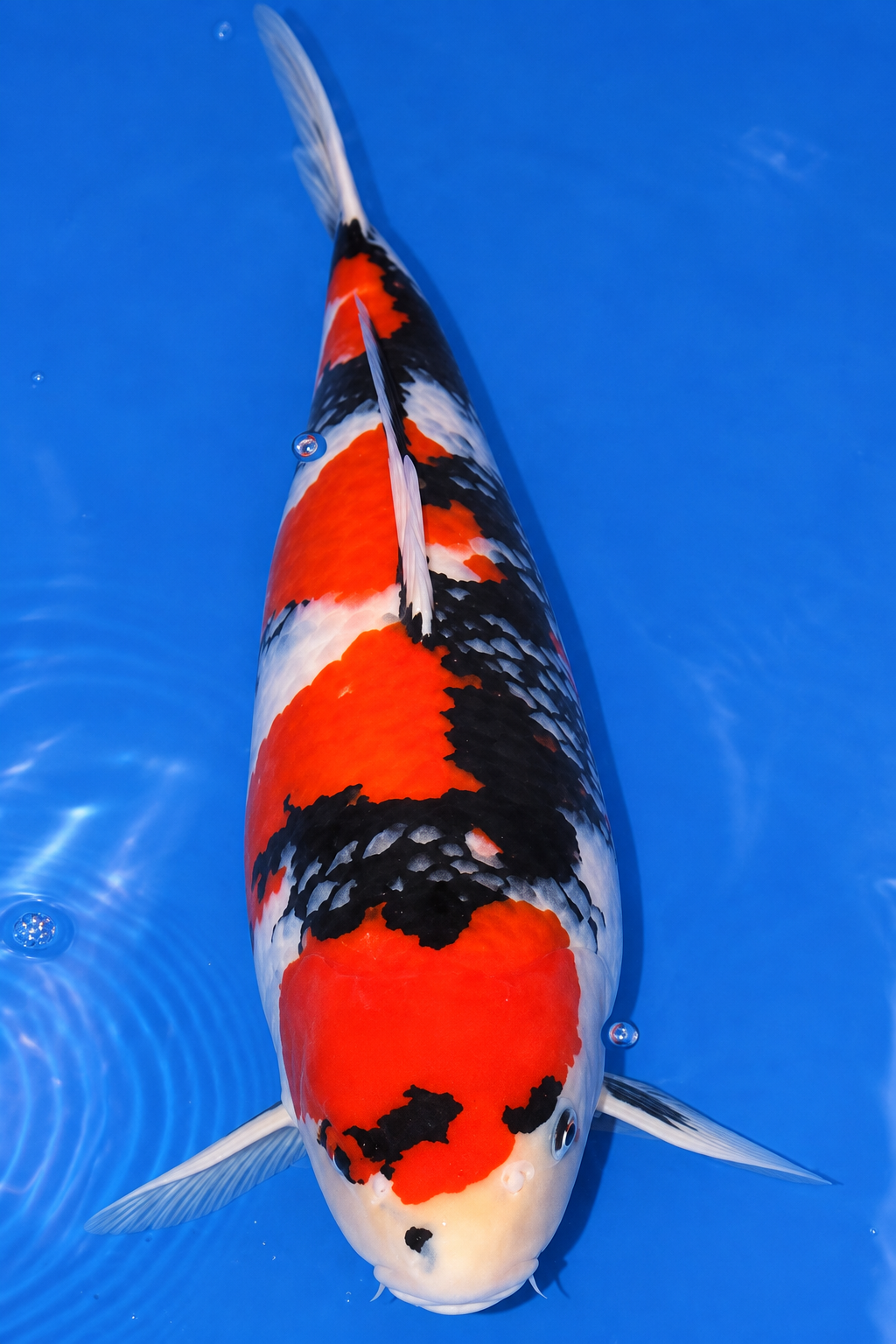
What is now the ideal layout of scales on a Doitsu?
The best arrangement is that of the Kawagoi, i.e. a row of small scales on either side of the dorsal fin and no other one present on the body. If now scales are present along the lateral line, they must also be of equal size and cover the entire length of the fish, this is not easy to obtain because scales are often of different sizes and poorly placed. Recently, Koi Show organizers have created special classes for Doitsu varieties: the Doitsu-A class for DoitSu Gosanke and the Doit Su-B class for all others. Detail of a Doitsu Showa. Detail of an Showa Wagoi.
In fact the Koi Doitsu are not completely devoid of scales, one can still find them along the lateral line, and on the top of the back. There are three varieties of Doitsu determined by the arrangement and the
quantity of scales present on the body:
the Kawagoi: also called Leather Carp which has no scales along the lateral line and small ones on the back.
The Kagamigoi also called Carpe mirror: this variety has large scales along the lateral line and on the back.
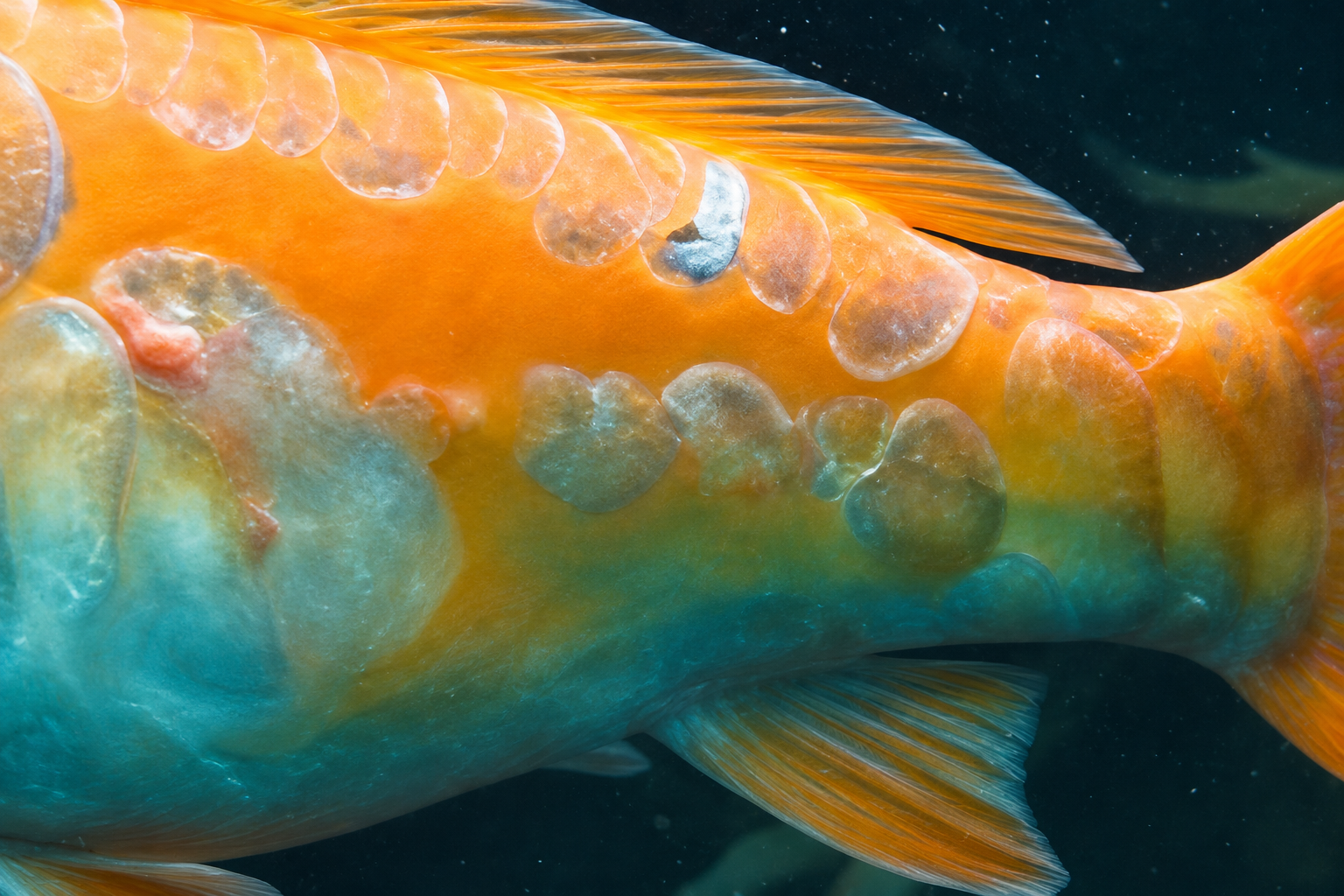
The Yorigoi: also called Ishigaki-rin (which means scale in the shape of a stone wall) or also Doitsu Yoroi. If scales are present elsewhere than along the dorsal fin and along the lateral line, they are Doitsu Yoroi, it is also called Koi in armor or Armoured Koi. This variety is considered to be of lesser value compared to Kawagoi or Kagamigoi.
The Doitsu Scale Arrangements. Kawagoi.
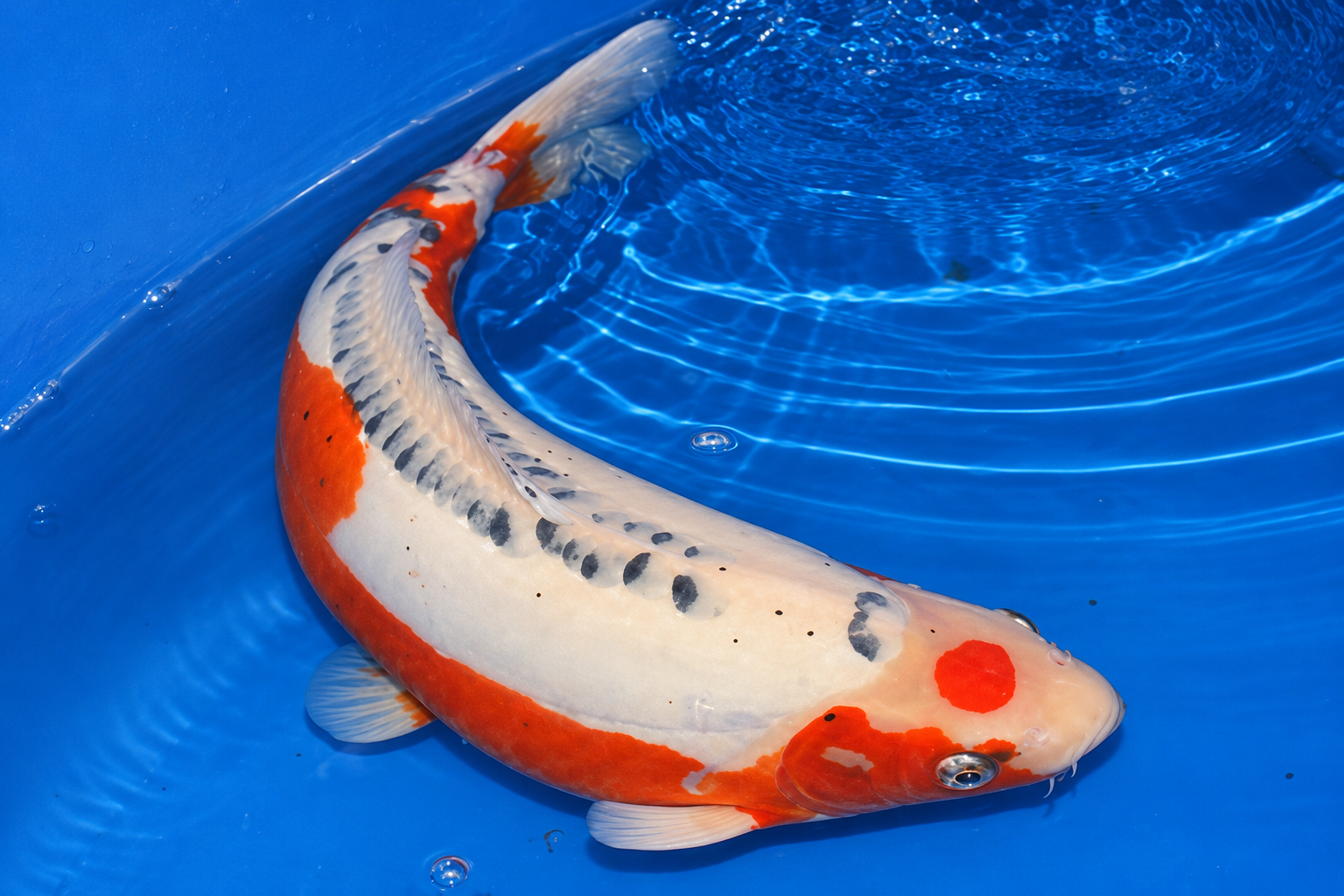
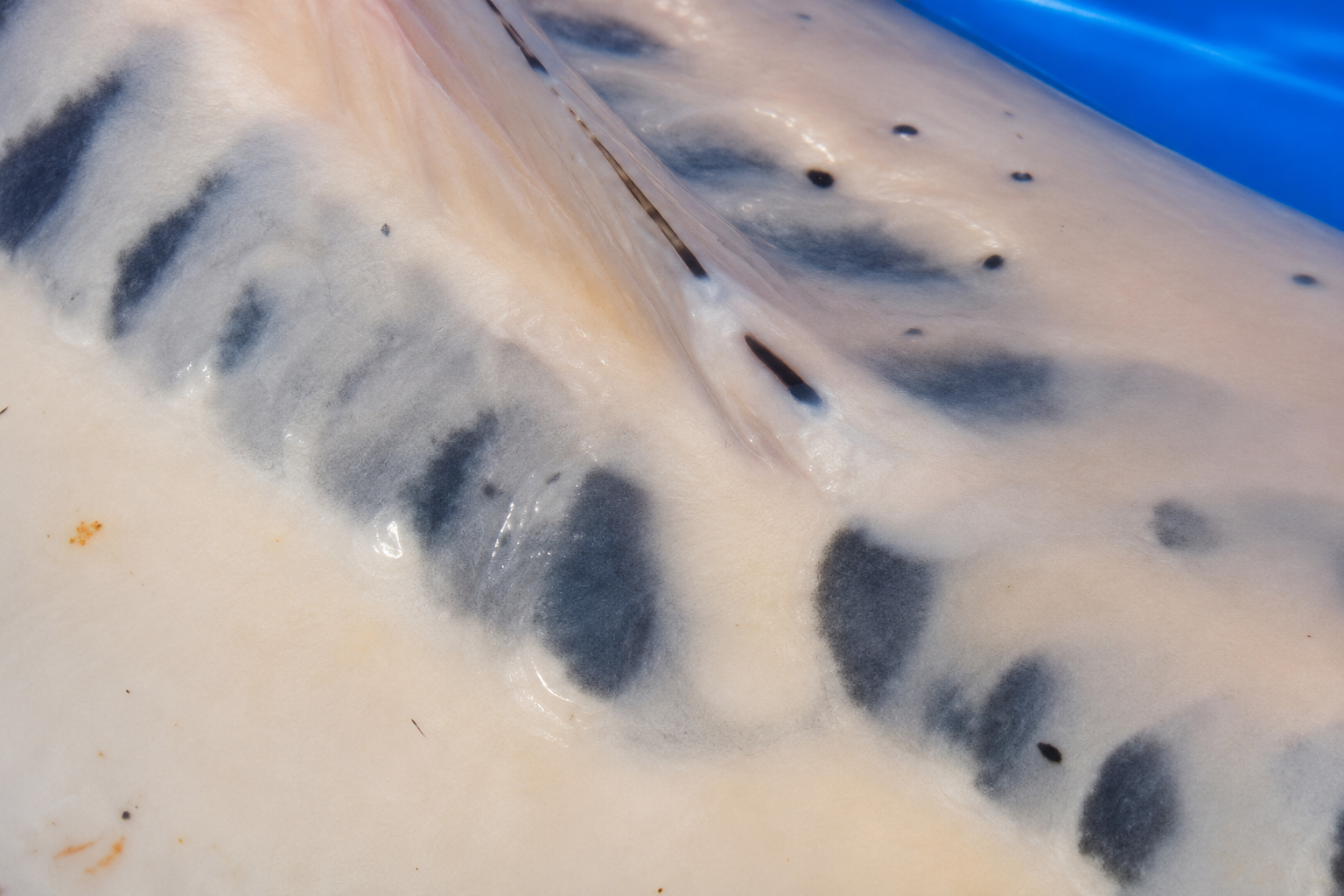
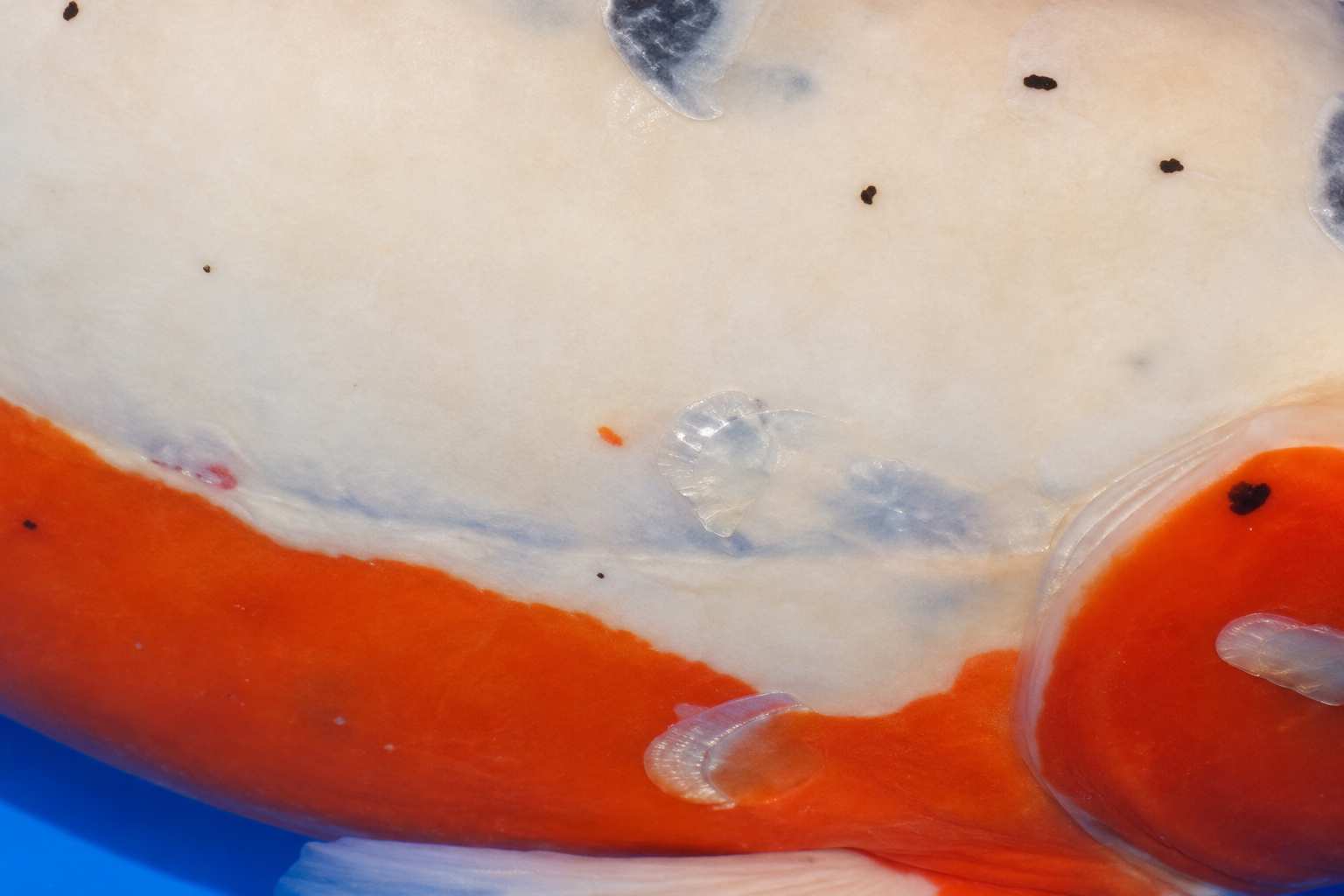
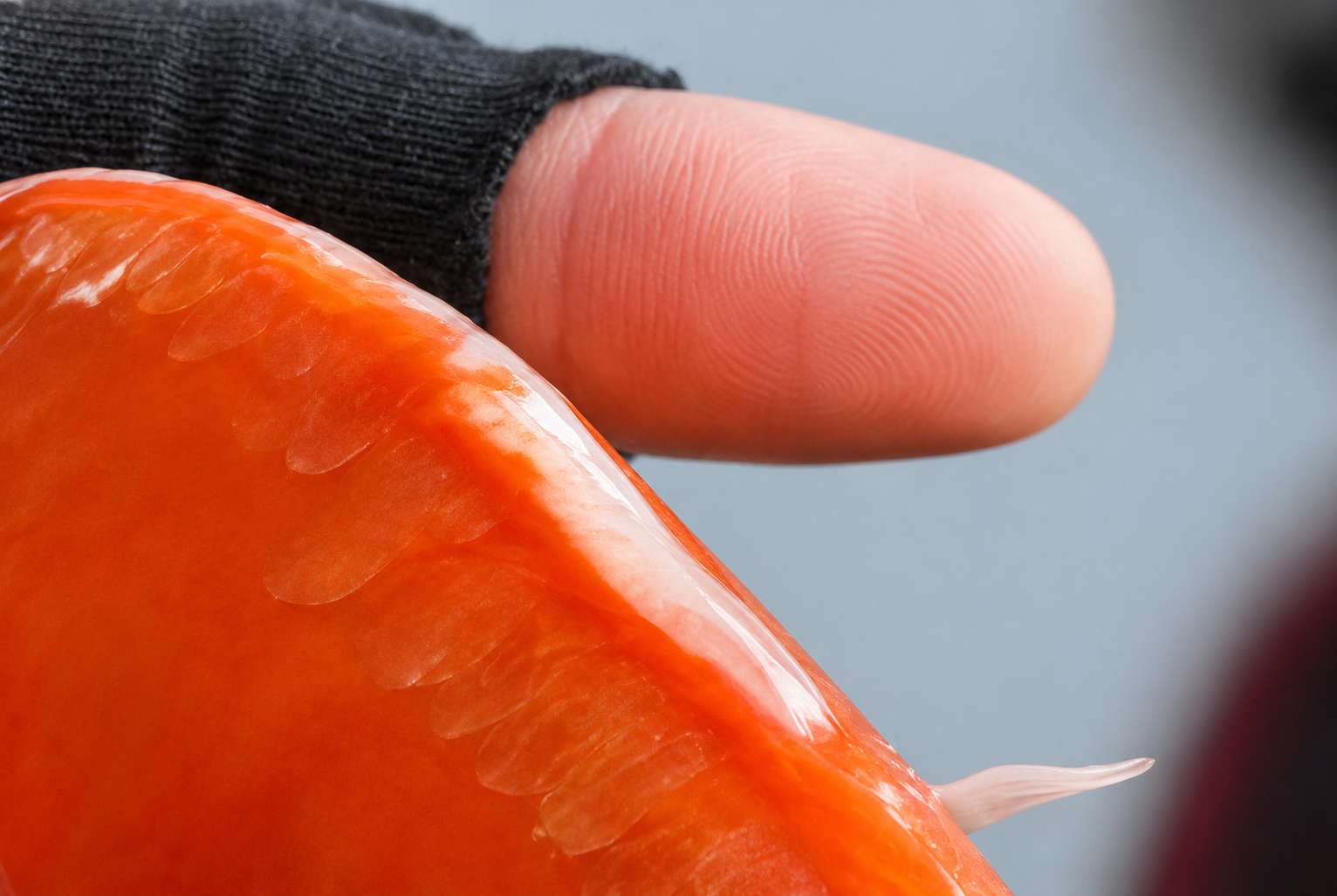
Also called leather carp, the scales are present only along the back on either side of the dorsal. Here is a photo of a Shusui with the layout of the Kawagoi scales.
The dorsal scales of the Doitsu Kawagoi. The side line of Doitsu Kawagoi without scale.
The Kagamigoi.
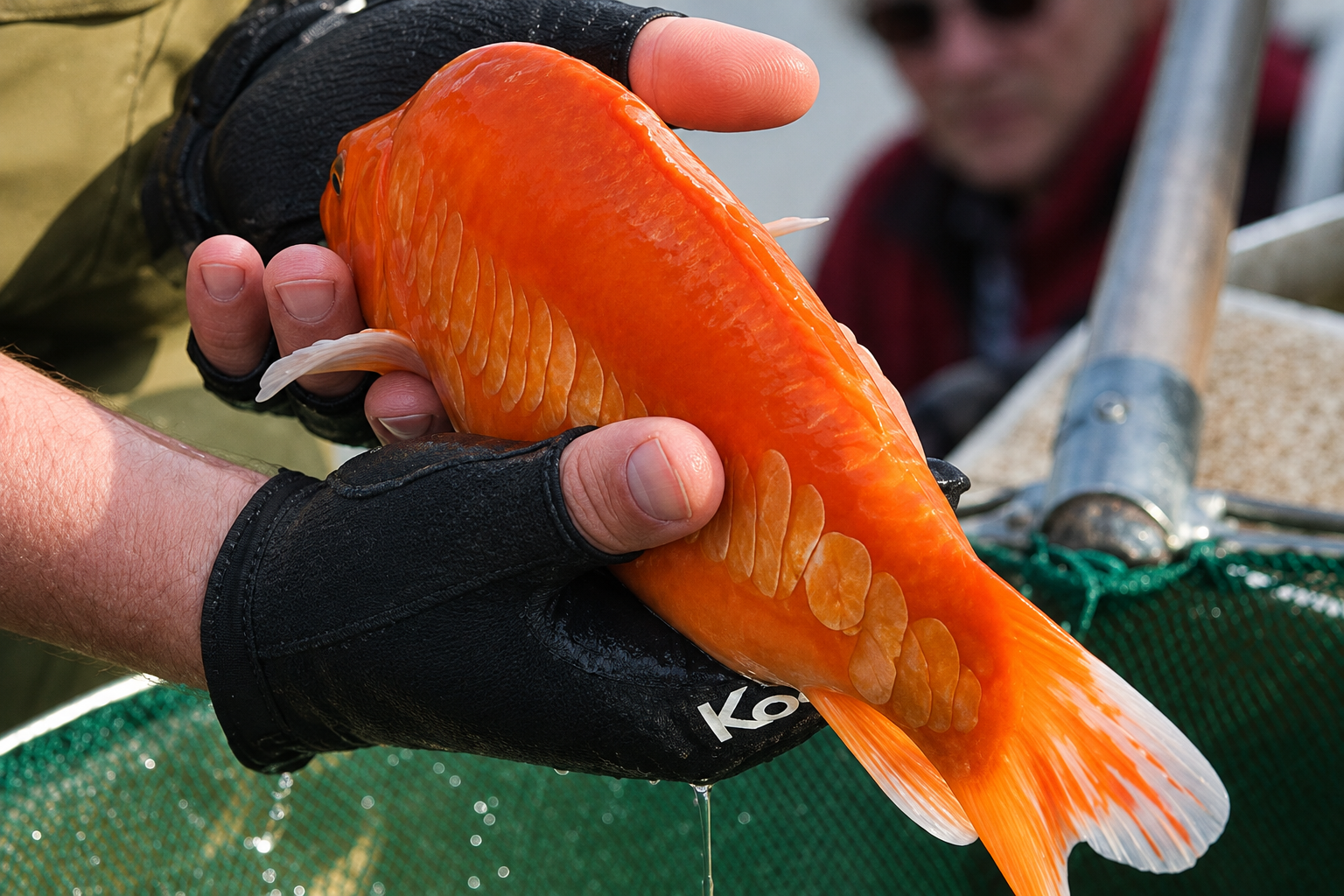
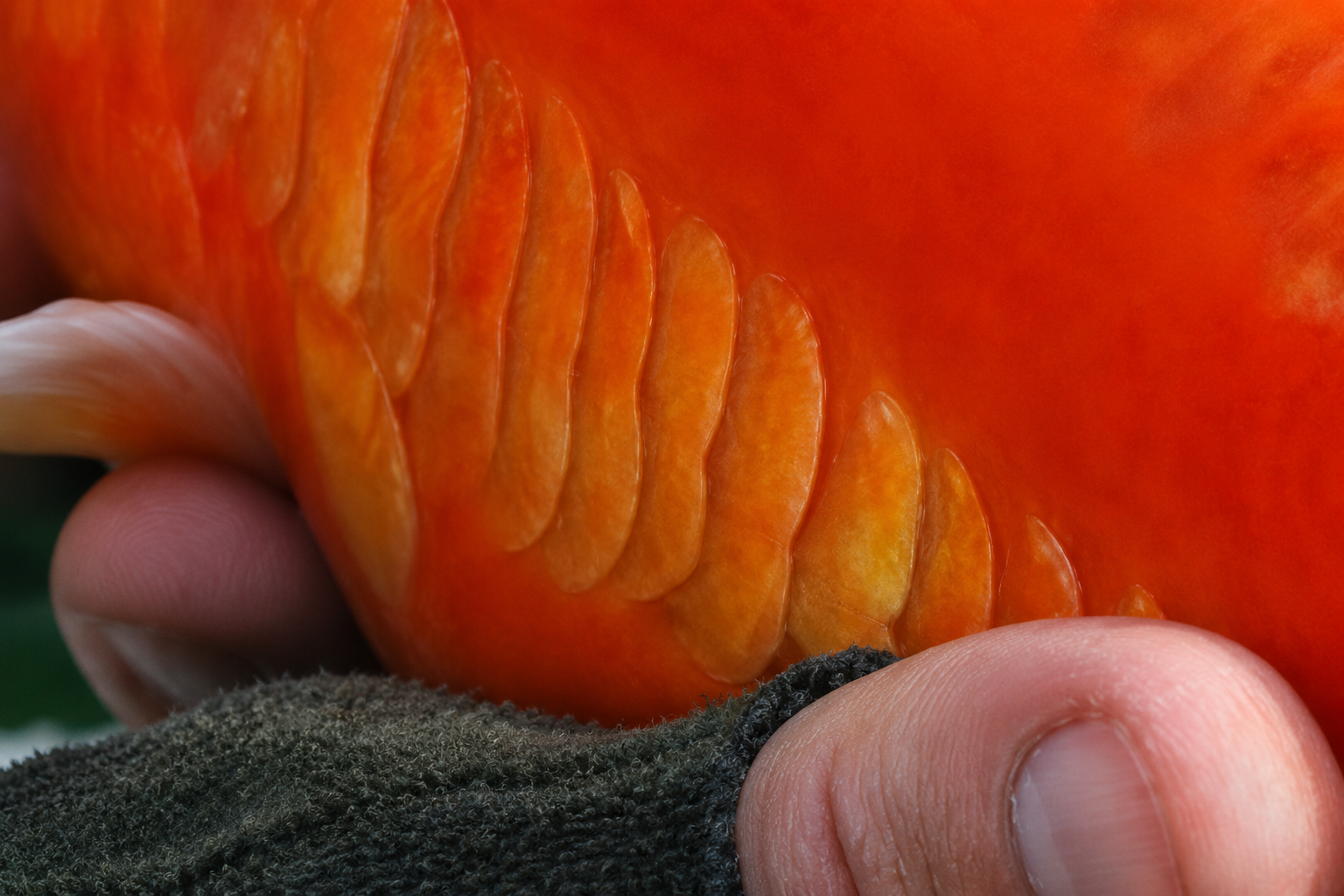
Also called Carpe mirror, here, the scales are present as for the Kawagoi along the back but also along the lateral lines. Here is a photo Doitsu Benigoi with the layout of the Kagamigoi scales.
The dorsal scales of the Doitsu Kagamigoi. The scales on the lateral line of the Doitsu KagamigoI.
The Yorigoi.
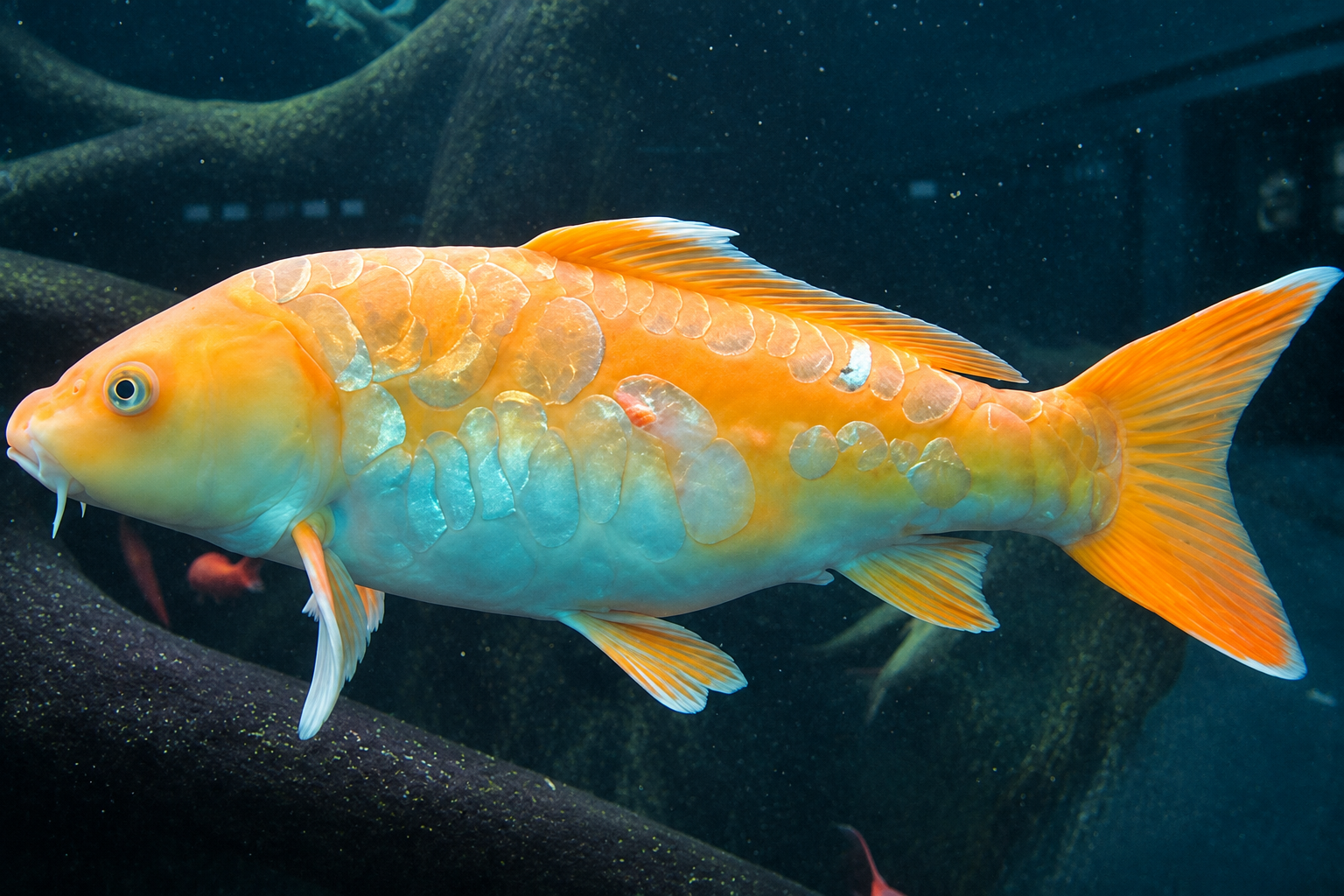
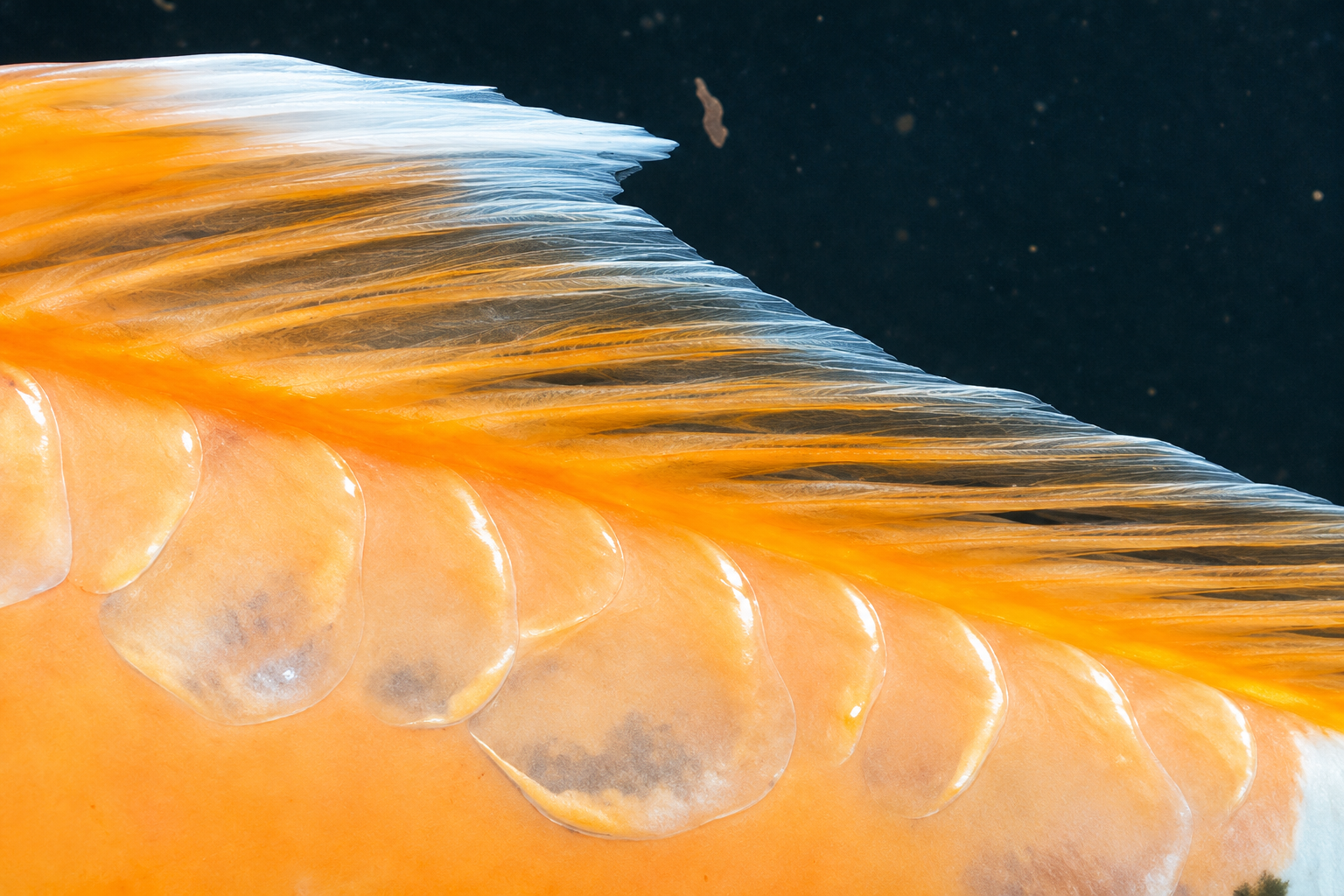
This variety is a Kagamigoi but with scales present in other places. Here is a photo Doitsu Kigoi with the layout of the Yorigoi scales.
The dorsal scales of the Doitsu Yorigoi. Scales arranged anywhere from Doitsu Yorigoi.
Varieties and Sub Varieties
The Doitsu Showa The Kumonryu.
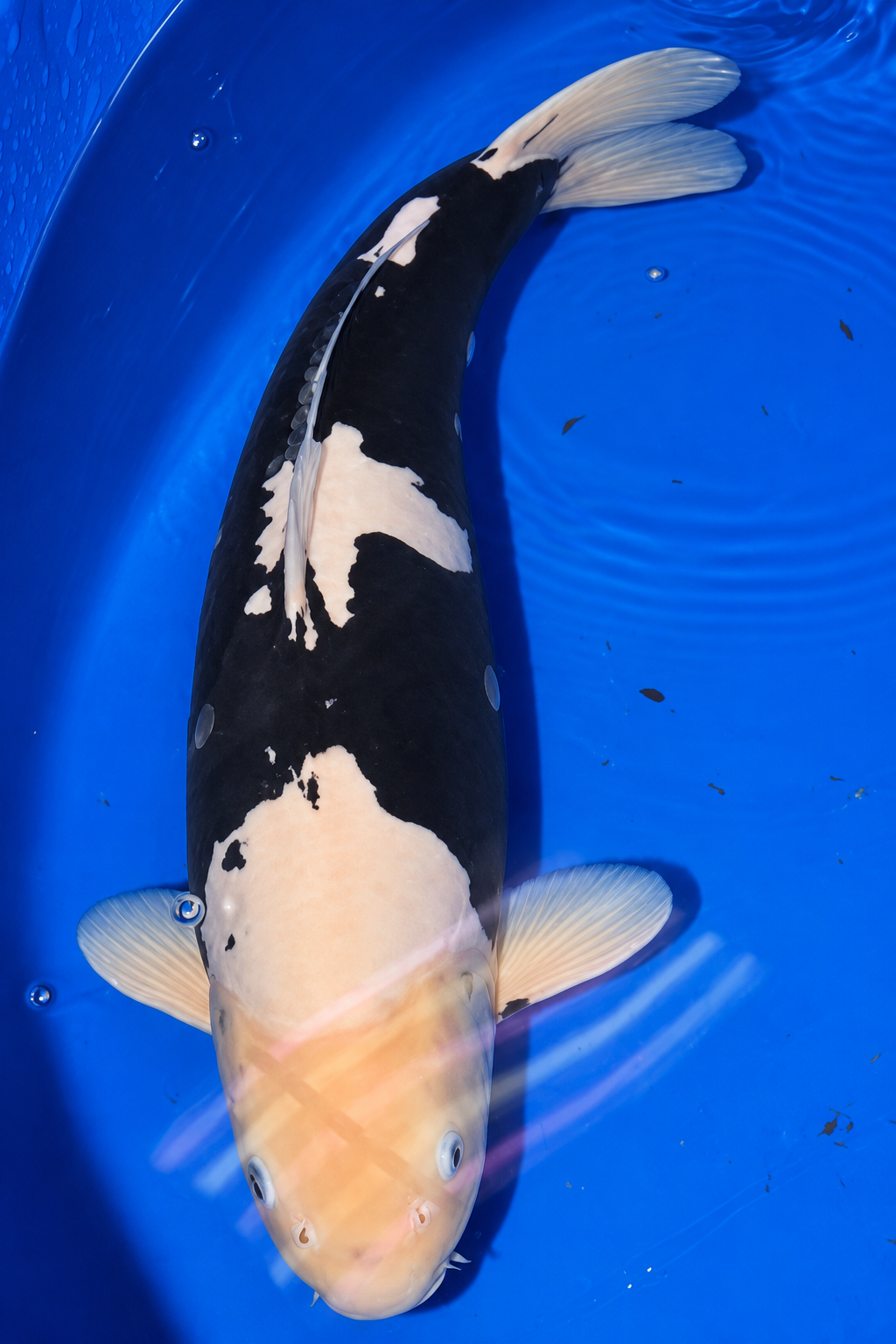
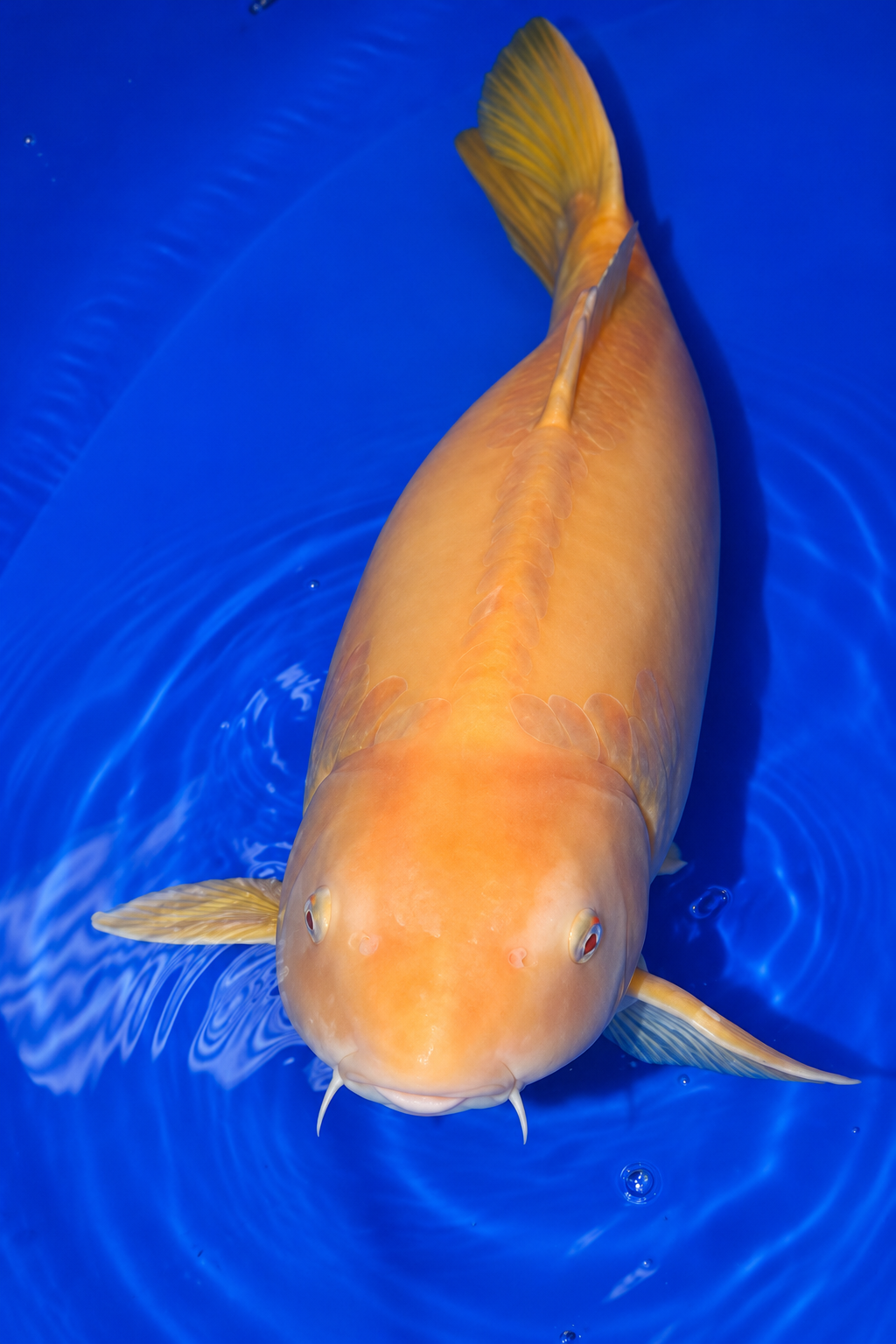
The Shusui, the Doitsu Chagoi.
Beni Kikokuryu, Kikushui.
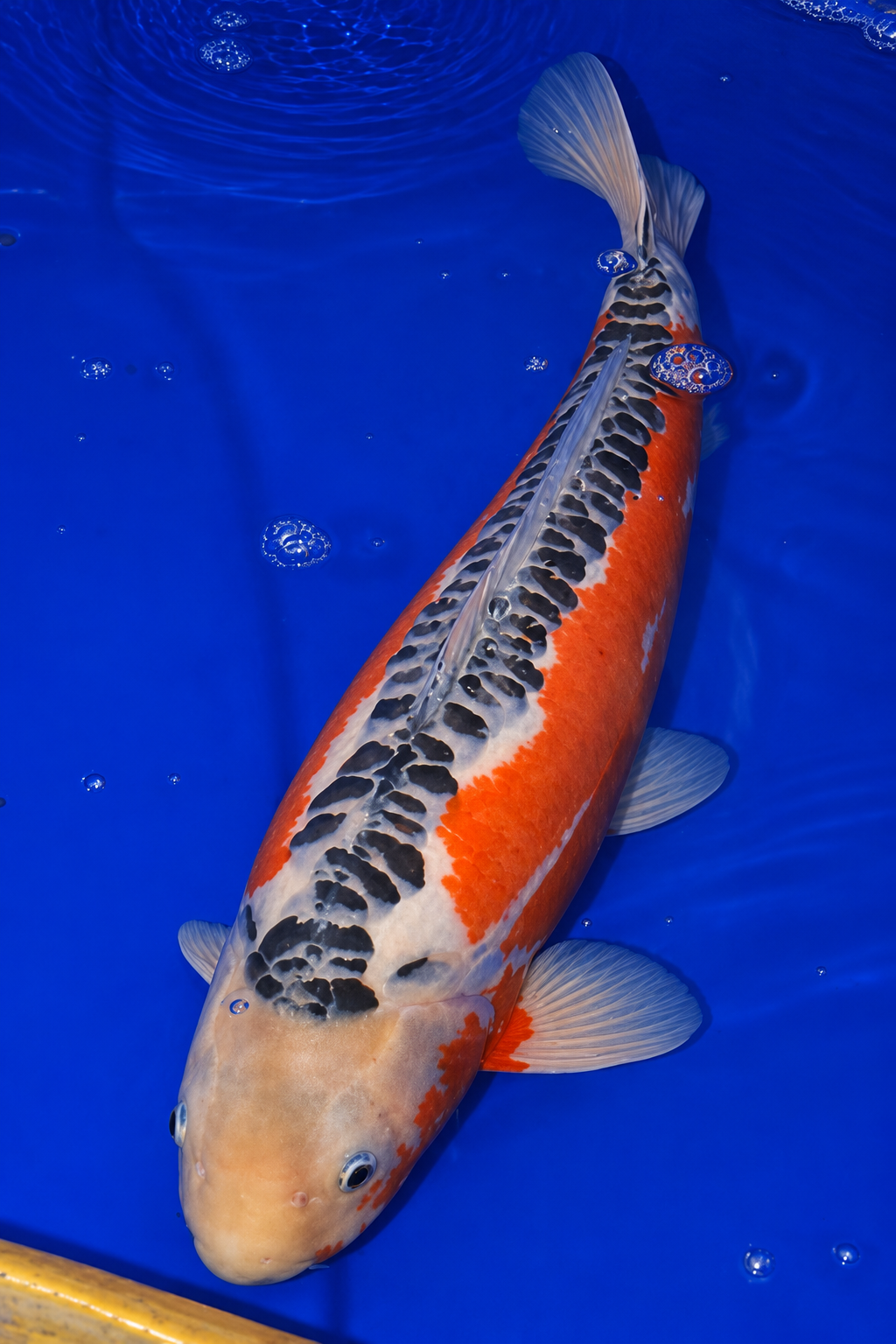
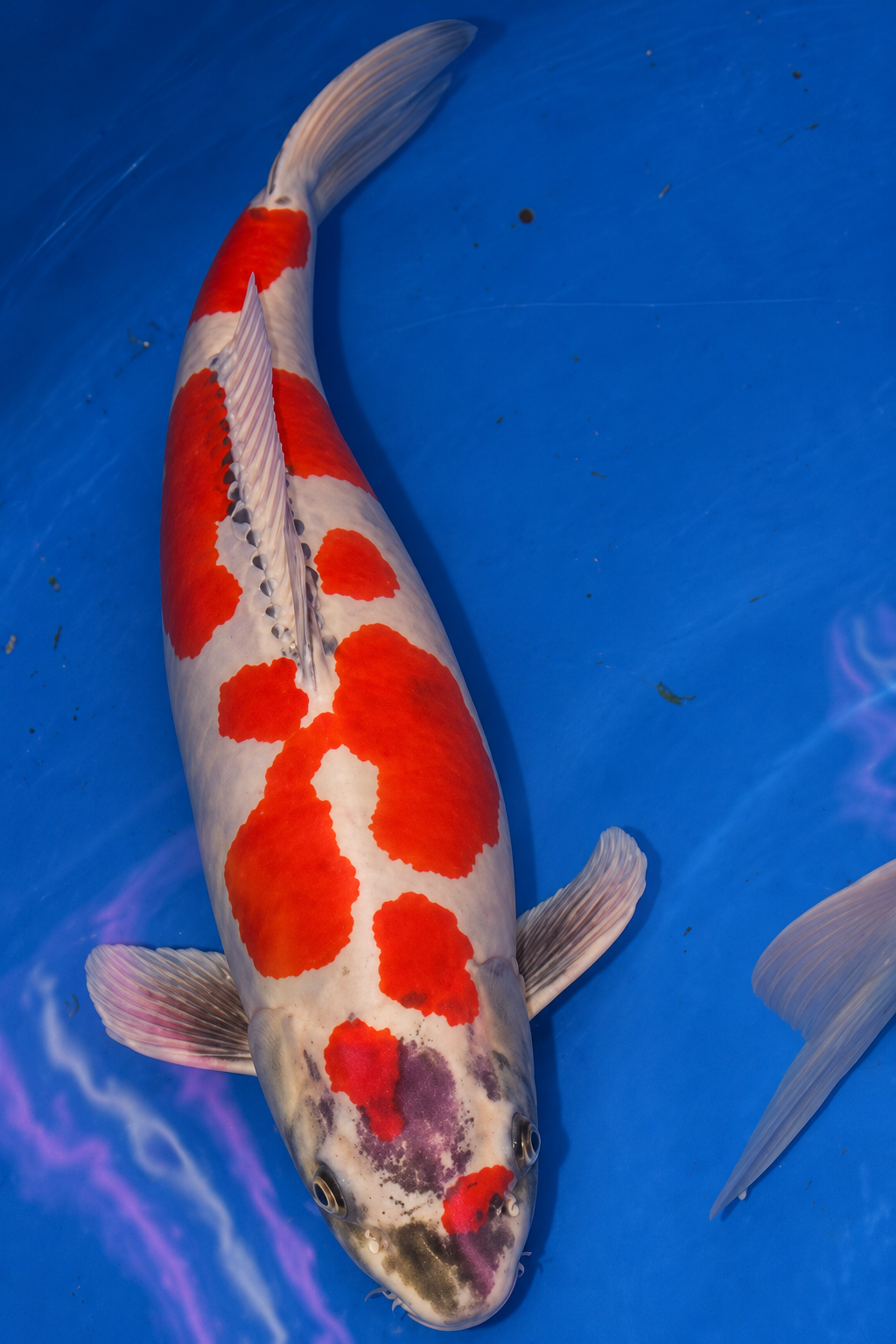
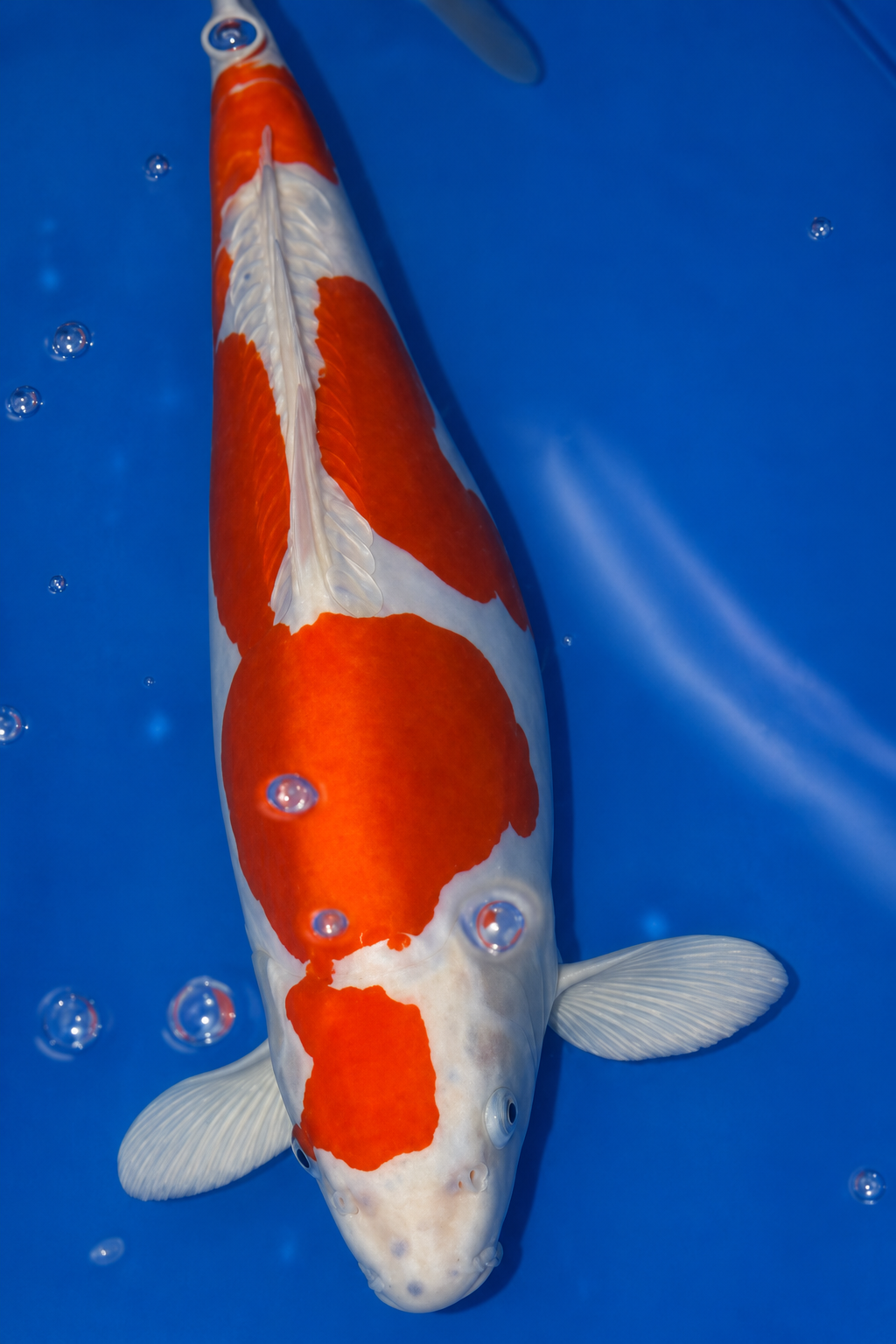
The Doitsu Sanke.
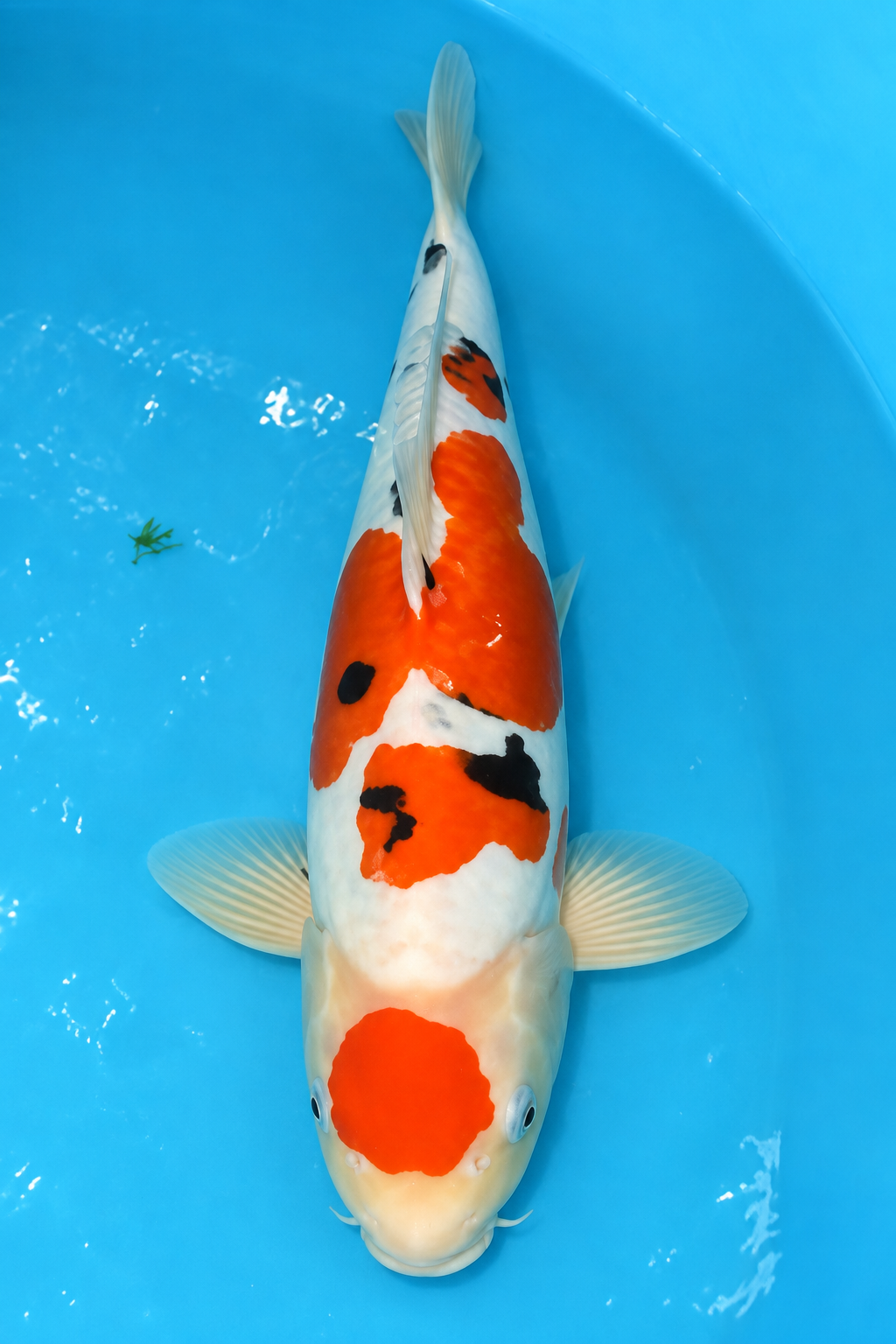
Glossary:
Must:
German carp imported into Japan in 1904 which is not completely scaled, there is usually a row of scales on each side line and on both sides of the dorsal fin. This carp is the basis of the "without scales" varieties of Nishikigoi.
Wagoi:
Carp covered with scales.
Sashi:
Represents the junction line between the front of a task and the white because there, a color scale is partially covered not a white scale, ideally the junction makes a scale, it must be regular and can disappear with the age of the fish. A "Sashi" on two scales is called "Nimai Sashi", and on three scales, a "Sammai Sashi". Sashi exists only on the "Wagoi" and not on the Doitsu.
Fukurin:
It is the small part of skin that appears between the scales of a large Koi that gives a slightly reticulated appearance, as if a slight net were placed on the fish. Fukurin is more visible in the family Hikarimono, at first it was thought that it was only possible with metallic Koi, but at present this is no longer the case. This term is mainly used for Ogon, Kohaku, Sanke and Showa, for others, rather the term "Net Pattern" is used.
Kiwa:
Red scale that covers a white at the back of a mark.
Kawagoi:
Leather carp, Kawa means "leather", a variety of Doitsu that has a skin that looks like a leather jacket. All Kawagoi are Doitsugoi but not all Doitsugosi are Kawagois.
Kagamigoi:
Variety of Doitsu also called "mirror carp" they have a row of scales on both sides of the dorsal and also along the lateral lines.
Yorigoi:
Carp Doitsu with scales on both sides of the dorsal, along lateral lines and also on the body.