
The Bekko
Family of the Bekko
Origins:
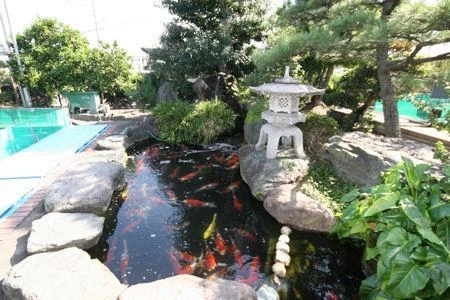
Bekko means "Tortoise Scrap" in Japanese. Some Koi families are victims of fashion. The Bekko is one because a few decades ago, the Bekko was a well-represented variety. Now it is in sharp regression and has almost disappeared. Even Ki Bekko and Ki Utsuri are very rare. The Bekko comes from the selection of the Sanke. In other words, at the departure of Sanke parents, one can obtain Sanke, Shiro Bekko, Aka Bekko and Kohaku. Although the Sanke and Bekko are in two different categories, they are brother and sister. The Kohaku from Sanke parents is not preserved because it is of poor quality. A pond near Narita's.
As it comes from the same lineage as the Sanke, the Bekko can have pectoral fins with the Teijima drawing. The Ki Bekko are yellow Koi with Sumi spots, they are called Bekko because the drawing is similar to the others but they come from the Kigoi and are therefore not of the same line. No longer does anyone raise Ki Bekko, its appearance is the pure fruit of chance.
How can we recognize a Bekko for sure?
Beginners can easily confuse a Bekko with a Utsurimono, especially if the Utsurimono has great white marks. Another possible confusion is between an Aka Bekko and an Aka Sanke. Imagine that a Shiro Bekko is a Sanke without Hi marks. The Sumi on a Bekkó is mainly placed above the lateral line, the Sumi brands are more discreet, rounder than those of a Showa or a UtSurimono because in these varieties, Sumi marks are much larger and envelop the body. There is normally no Sumi on the head of a Bekko. When Sumi marks are present on the pectorals, they are in the form of discreet lines (Teijima), they are never round Sumi spots at the junction between the pectorale and the body (Motoguro). At first glance, it is difficult to differentiate an Aka Sanke from an Aka Bekko . But when you look carefully, you have to find somewhere on the Aka Sanke, a clear mark Shiroji (White), either on the nose, before the tail or under the lateral line. The Aka Bekko may have a paler belly and white fins but nowhere can you find a clear separation between the Hi and the Shiroji.
Item 1:
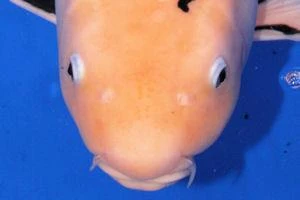
The head must have no Sumi marks. It is white for the Shiro Bekko, red for the Aka Bekko and yellow for the Ki Bekko.
Item 2:
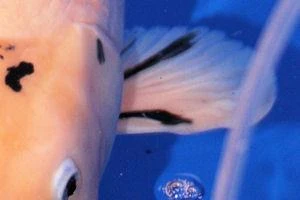
Pectoral fins can have Teijima. That is, Sumi bands in the fins just like Sanke.
Item 3:
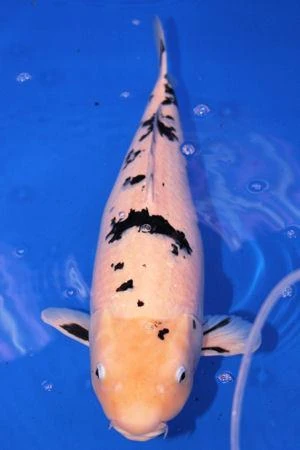
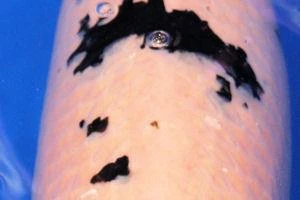
It is a white, red or yellow fish with small Sumi marks placed above the side line.
Developments:
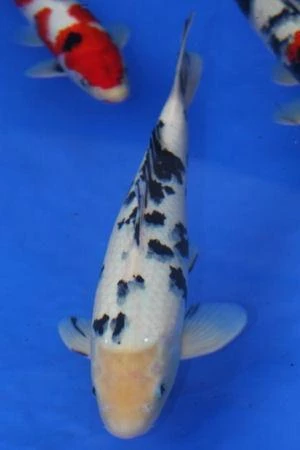
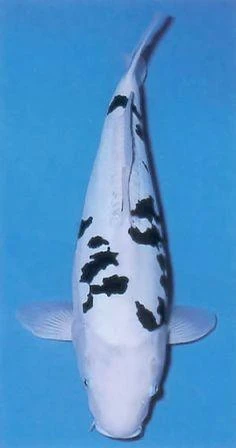
The Bekko are victims of fashion. About 30 years ago, they were widely represented. This is no longer the case at present, it is very rarely found in competitions. Of the three varieties, only Shiro Bekko is well known, it is a white Koi with Sumi spots. It is a Sanke without Hi marks.
How to judge the quality of a Bekko?
1. Sumi spots must, as with the Sanke, be well marked and bright.
2. It is preferable that the head should not bear Sumi marks.
3. Pectorals may have Teijima.
4. Sumi marks cannot descend below the side line.
The Shiro Bekko must have a real Shiroji base color without yellowish areas. Unfortunately, a classic problem of the Shiro Bokko is to develop a yellowish head. When selecting a young Shiro Bakko, not even the slightest Hi brand, even light, should be present. Also avoid for the Aka Bekko and Ki Bekko any Shiroji brand or a change of colour in the background color. For a young Bekko, the Sumi brands can be less well marked and can even be underlying and will appear with a bluish color. Select a fish with well distributed Sumi marks from head to tail and still sufficiently important marks taking into account the future growth of the fish. Too many Teijima marks on pectorals or Ojiya on the tail are not indicated, they can decrease with the growth of fish but this is not a certainty.
Varieties and Sub Varieties
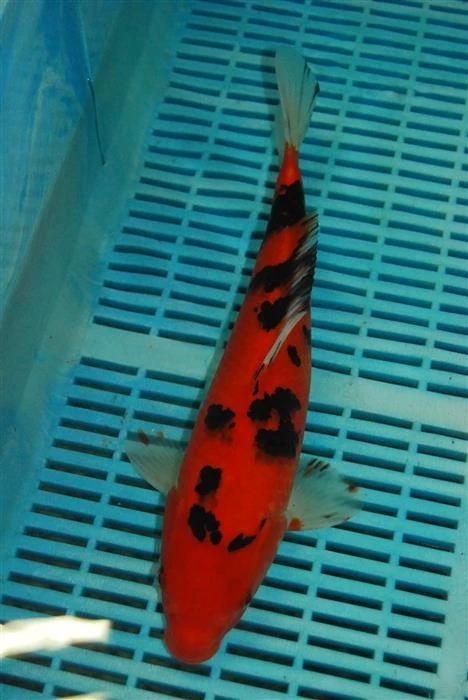
The Aka Bekko The Ki Bekko L的Aka Bekko is a red Koi with Sumi spots.
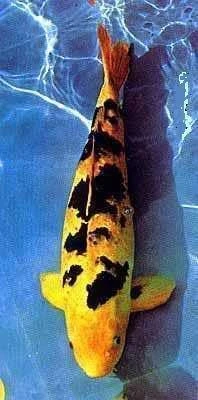
Ki Bekko is a yellow Koi with Sumi spots.
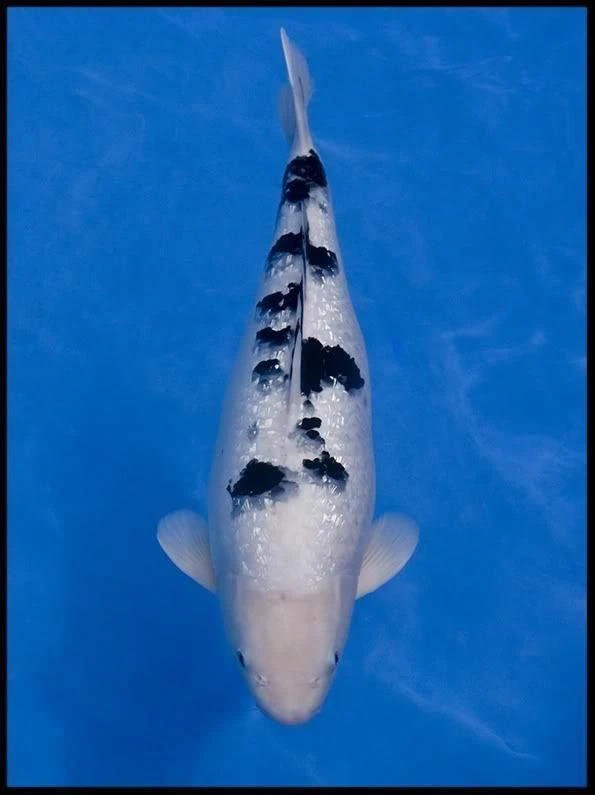
Doitsu Shiro Bekko Kinginrin Shiro Bakko Variety Doitsu of Shiro Bokko, white with Sumi spots
Kinginrin variety of Shiro Bekko.
Glossary:
Teijima:
Sumi in band form, a term often used to describe the pectoral fins of a Sanke.
Motoguro:
Sumi spots at the base of the pectorals. Ideally, they should represent 30% of the surface. This should appear on varieties from Karasugoi such as Showa, Shiro Utsuri, Kumonryu, Beni Kunomryu etc.
Ojiya:
Sumi lines in the tail of fish.