
Tanchos
Family of Tancho
Origins:
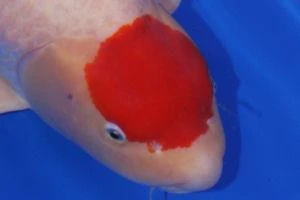
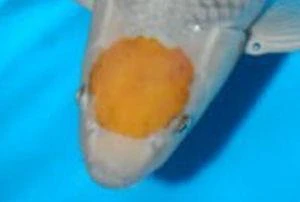
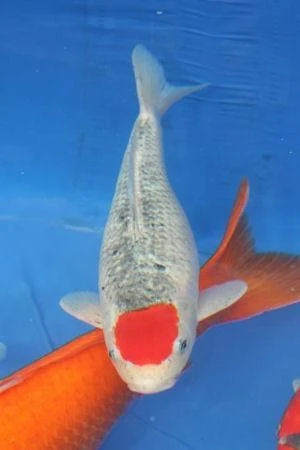
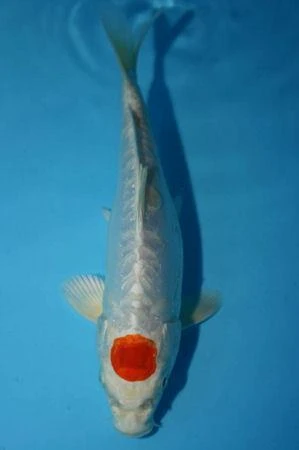
A Tancho does not come especially from a line of fish, it is rather a very special characteristic of the pattern, a Tancho must have a round mark on the head often red color (Hi) and the absence of that same color elsewhere on the body. A Tancho Kohaku for example, has a round Hi spot on the head and no other Hi mark on the body . In the case of a Showa, if it has a single Hi round spot on its head, it is then called Tancho Showa. Each variety that has a single round spot on the head and the absence of this same color elsewhere on the body is called "Tancho". At the Koi Show, they are judged in the category of Tancho and not in their original family. The Tancho are made of Doitsu and Kinginrin varieties.
How can I recognize a Tancho with certainty?
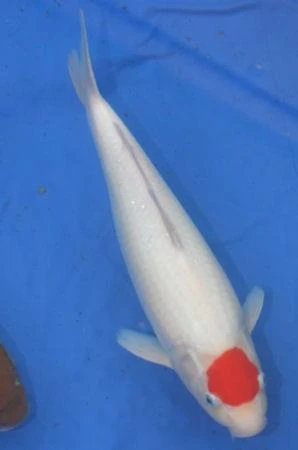
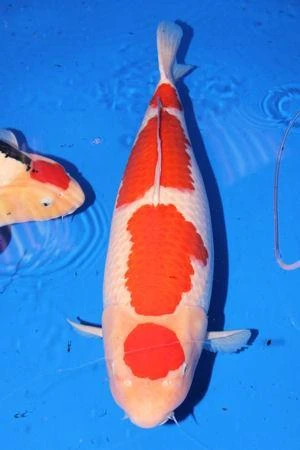
A Tancho must have a very round mark on the head and a complete absence of the same color on the body. If the fish, in addition to the mark on the Head, has marks of the same colour elsewhere on the body, it is called "Maruten" and not "Tancho".
Item 1:
The mark on the head must be as round as possible and must be well centered between the eyes and the nose.
Item 2:
The color of the stain cannot be present elsewhere on the body of the fish.
Item 3:
The mark must be round but not especially red, as in the case of Tancho Ochiba.
Developments:
Of all varieties, the Tancho Kohaku is most often high. An excellent Tancho Kohak must have a white Shiroji as snow and a round spot Hi the largest possible well located between the eyes and nose, its contour must be clear and the red must be very deep. There are three reasons why the Hi d'un Tancho spot can disappear: Too fast growth, an environment that changes rapidly, a disease. It is therefore preferable to buy a Tancho at least three years old because, after this age, the growth is weaker.
How to judge the quality of a Tancho?
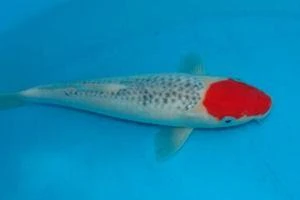
1. The mark on the head shall be as round as possible.
2. The mark must be well centred.
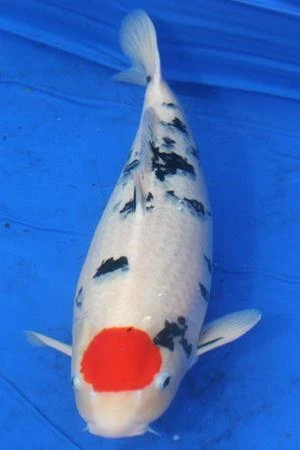
3. Before being a Tancho Showa, the fish must be a beautiful Showa (e.g.).
There are many varieties of "Tancho": Tancho Kohaku, Tancho Sanke, Tancho Goshiki etc. and among these varieties, the most interesting is the Tancho Showa. In other varieties and especially in the Kawarimono, you can find a very beautiful and very rare Tancho but the most appreciated will be the Tancho showa thanks to the richness of its design and the power it reflects. If you compare the Kohaku and the Showa, it is often the Kohaku who wins because of the beauty of his drawing, but there is no photo between the Tancho Kohaku without drawing on the body and a Tancho Showa with body marked with Sumi spots. In the case of a Tancho showa and a Tan Cho Sanke who both have Sumi spots on the body, sometimes there is a competition between them, often the Tancho ShowA has the advantage.
This is not a Tancho Kohaku because there's Hi somewhere other than on the head. It's a Maruten Yodan Kohaku.
The Tancho Goshiki comes from the selection of the Goshiki. The belly of the fish must be perfectly white and the Hi spot on the head must be clean, it is rare to find a fish that has all these characteristics. The Tancho Gin Matsuba comes from the Kujaku selection. This variety must have a large Hi spot on its head and also have the same Matsuba pattern on every scale of the body. The Tancho Platinum comes from the selection of Hariwake, the colour can be orange, red or Yamabuki (glossy yellow), the body must have a strong reflection Platinum. The Tancho Ginrin Kohaku comes from the choice of Ginrin Khoaku. This variety has three criteria to respect: the spot must be round and red, the Ginrin scales must cover the whole body and the body must be very pure white.
Varieties and Sub Varieties
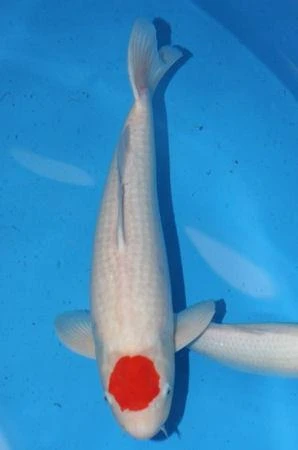
Tancho Kohaku Tancho Sanke The very symbol of the Tancho, the Tancho Kohaku. He is prized by the Japanese because he represents the national flag.
It's a Sanke with a single Hi brand centered on the head.
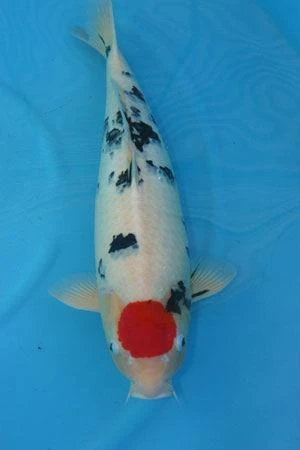
Tancho Showa Kinginrin Tancho ShowA The Tancho showa is a Showa with a Hi brand only on the head. Probably the most beautiful of the Tancho. Variety with brilliant scales (Kinginrin) of the Tan Cho Showa.
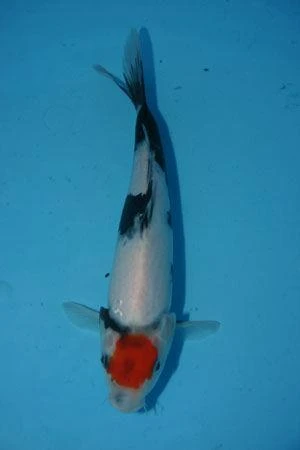
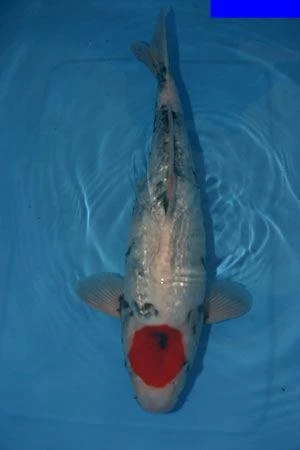
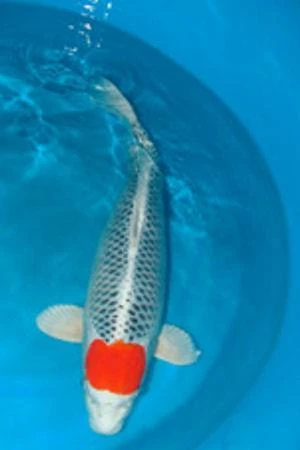
Tancho Kujaku Tancho Beni Kumonryu Variety Tancho du Kujaku. Also called Tancho Gin Matsuba. Variety Tancho de Beni Kumunryu.
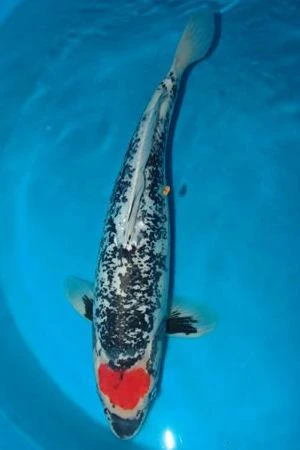
Tancho Goshiki Tancho Kikushui Variety Tancho du Goshiki.
Tancho variety from Kikushui.
Glossary:
Tancho:
Red mark only on the head.
Maruten:
Circular spot on the head. If the koi only has a red spot on the face, it is called "Tancho". If it has multiple red spots and a circular on the head, it is referred to as "Maruten".
Pattern:
English term for the shape of the drawing on fish.
Matsuba:
The scales have a dark center indigo (Ai) unlike the Kage which appears on the Shiroji, the Matsuba also appears on the Hi and we find this "pattern" on the metal and non-metallic koi.