Koi water, livestock and quality
The water, the breeding and the quality of the Koi. The breeding. As explained on another page, 200 years ago, koi mutated and varieties with color stains appeared. The breeding and selection of these fish then began. This is the beginning of the Nishikigoi, which at that time were reserved for the rich and the Japanese nobility. During the "Meiji" period (between 1868 and 1912), the most beautiful Koi that existed were presented to the public and a variety like Kohaku was created. The Taisho exhibition was held in 1914 during the 3rd year of the "Taisho" era (between 1912 and 1924). It was at this time that the Nishikigoi began to become more popular, the varieties produced and stabilized during the "Taisho" era are Taisho Sanshoku (Sanke), Shiro Utsuri, Ki Utsuria and l-Asagi. In the following period, the "Showa" era (between 1925 and 1989), the Showa Sanshoku, the Kin Uchiwa, the Kin Kabuto were created. During the 7th year of the "ShowA" era (1932), breeding and research on the Nishikigoi became a full-time activity in Niigata. The creation of the Doitsugoi through the crossing of a Nishikigoi with a German carp Doitsu created two Koi families: The "Kawagoi" (leather carp which do not have a scale along the lateral lines and few scales also along the dorsal line) and the "Kamagoi" (mirror carp which has large scales along the dormitory line). In 1920, in order to obtain a golden fish, a golden wild carp was crossed with a Koi and, in 1946, the first "Ogon" (Koi of metallic aspect) appeared. During the Second World War, breeding and selection were temporarily suspended but, with the introduction of the Nezu Ogon, the family of Hikarimono was born and this led to the golden age of Nishikigoi. Before this period, the selling price of fish was estimated simply by the quantity and size of the animals, no matter whether they were male, female, with a nice drawing or not. Between 1955 and 1970, many former farmers converted to Nishikigoi breeding and made a fortune in this market, which at the time was mainly centred on Japan. This period marks a change of mentality as amateurs became more difficult. Clubs have formed, exhibitions have taken place, selection criteria have also changed. Females, for example, became preferred to males, some varieties were preferred to others. As a result, many breeders found themselves with a lot of unsold in their ponds, which caused their profits to fall sharply. Some breeders did not adapt and disappeared, others persevered and adapted by selecting much more their fish to improve its quality. Sales only accounted for 5% of what they were before, which led to a very sharp increase in prices. In the 1980s, the quality of fish determines its price, but another problem will arise, it is a huge economic crisis in Japan. This crisis greatly reduced local demand and at that time 70% of production was sold in Japan. The breeders have had to change again, many of them have returned to abroad. Currently, the numbers are reversed and almost 70% of the fish are sold for export. There are more than 80 different varieties of Nishikigoi, the International Nishikigoi Promotion Center (INPC) will fix 26 called fixed varieties, the others being variations of its same fixed varieties.
The 26 fixed varieties are:
1. Kohaku
2. The Sanke
3. The Showa
4. Tancho.
5. Shiro Utsuri
6. The Bekko
7. Aka Matsuba.
8. The Asagi.
9. Shusui.
10. Koromo.
11. The Goshiki.
12. Kujaku.
13. Gin Matsuba.
14. The Ogon.
15. Platinum.
16. Hariwake.
17. Yamato Nishiki.
18. Kin Showa.
19. Kin Ki Utsuri.
20. Kikusui.
21. Chagoi.
22. The Ochiba Shigure.
23. Benigoi.
24. The Kigoi.
25. Karasugoi.
26. The Kumonryu.
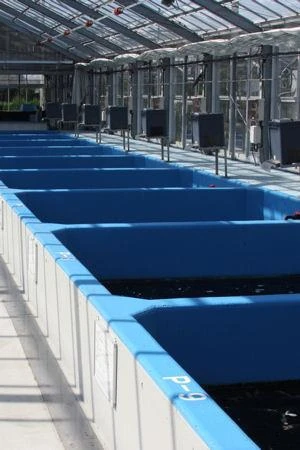
In Japan, Koi breeders are called "Koishi" and merchants "Koiya". The Koishi always look for ways to develop or improve fish and are very happy when they succeed in creating or stabilizing a new variety while the Koiya is looking throughout Japan for the most beautiful examples of Nishikigoi to present the best possible quality to its customers. Koishi and Koiya, have been strongly involved in the creation of the "best Nishikigoi" and they are responsible for the development and distribution of the beautiful varieties today. Japanese NishikiGOi have been created and raised by people who do not regard the Koi only as a business but are true enthusiasts. Commercial success can also happen to the Koishi who created the most beautiful Nishikigoi and the Koiya who harvested the most beautiful fish. The Nishikigai are now raised in many countries such as: Israel, Taiwan, China, the United States, etc... Koi farming is well developed in Japan in cities like Niigata, because there they find a very quiet environment, Mud ponds with quality clay and pure water from snowmelt. To succeed a Koi farm, it takes three conditions, calmness, quietness and Mud ponds of exceptional water quality. The Nishikigoi will be raised from spring to autumn in mud ponds calm and surrounded by mountains. Certain Koi will spend between 7 and 8 years in these ponds. What should be noted is that there is no current in these ponds, the water does not flow like in a river, the Koi grow up in a calm pond. To have a perfectly consistent body, they must live in such an environment. It is not a good idea to create a more important current than necessary when you raise Koi.