
The Shiro Utsuri
Family of Utsurimono
Origins:
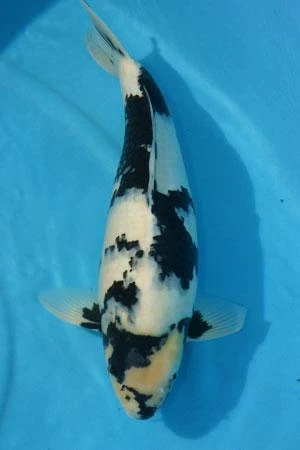
Of the three main varieties of this family of Utsurimono, only Shiro Utsuri is known and well represented among breeders. During the Koi Show, other varieties are rarer such as Hi Utsuris and even rarer for Ki Utsuria. The origin of this variety is difficult to identify, its origin is placed around 1925 but other sources give a much closer date. A Shiro Utsuri can be considered a Showa without Hi brands. The Hi Utsuris were often of poor quality because the Hi was not very marked, but crosses with Kohaku improved the variety. A Shiro utsuri from Omosako.
The Ki Utsuri is an ancient variety that dates back to 1875 and was then called "Kurokihan". Note the Kin Ki Utsi variety is still well represented while the Ki Utsti has almost disappeared from our ponds. We use a Shiro Utsuni couple to produce Shiro Udsuri and a Showa couple to produce Showa, it's obvious but in the production of Showa you can have both Shiro Usuri (Showa without Hi brands) and Hi Utsumi (Show a without Shiroji brands), which proves that these three varieties: Showa, Shiro, and Hi Utsuri have the same origin. Shiro and Hi Udsuri produced by a couple of Showa are usually preserved but if you want high quality, it's best to have Shiro Utsuris from a couple of Shiro Udsuris.
How can I recognize a Shiro Utsuri with certainty?
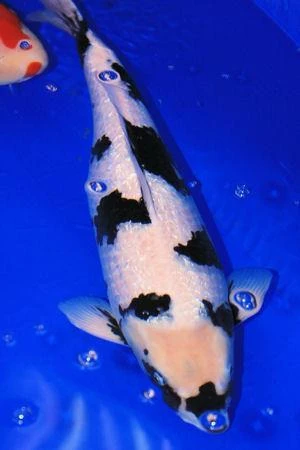
The Shiro Utsuri can possibly be confused with a Shiro Bekko or possibly with a Showa. The Shiro utsuri is a bicolored fish, with a black base color and large white marks. If the fish has the slightest Hi brand, it is a Showa and not a ShiroUtsuri.
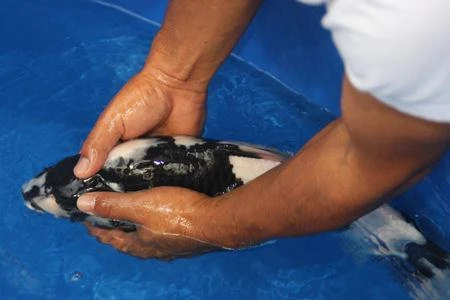
Item 1:
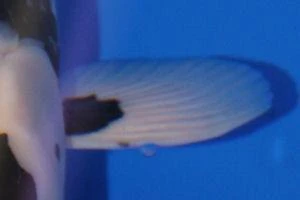
Like the Showa, the Shiro Utsuri has Motoguro. That is, black spots at the base of the pectorals.
Item 2:
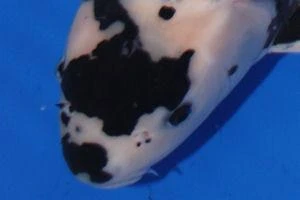
Shiro Utsuri has Sumi on his head. The mark on his head is called Hatchiware or Menware. Shiro Bekko has a white head.
Item 3:
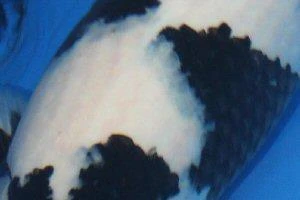
The Sumi drawing of Shiro Utsuri is in the form of large spots that can pass under the side line of the fish because it is the basic color of the fish, this is the main difference with the Shiro Bekko. There can only be black (Sumi) and white (Shiroji) as colors, if there is Hi, it is a Showa.
Developments:
Koi with Hi drawings such as Kohaku, Showa and Sanke have the possibility to absorb the red pigment called carotene that we supply with food. Because of the accumulation of carotene in the fatty layers of fish, white can become reddish (pink) even if the Koi has a very pure white originally. For Shiro Utsuri, no pigments are provided in food, For this reason it is important not to raise high quality Shiro Udsuri with Kohaku or other varieties that need pigments in food. Sumi is a color that evolves favorably in hard and alkaline water. The Shiro Utsuri, Hi Utsuris and Showa come from the same lineage, these varieties are well stabilized.
How to judge the quality of a Shiro Utsuri?
1. Sumi brands must be well balanced and well distributed.
2. Shiroji must be white as snow.
3. There must not be any Hi mark on the body.
4. The Motoguro must cover 30% of pectoral fins.
Varieties and Sub Varieties
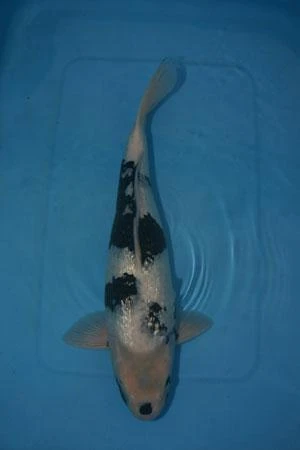
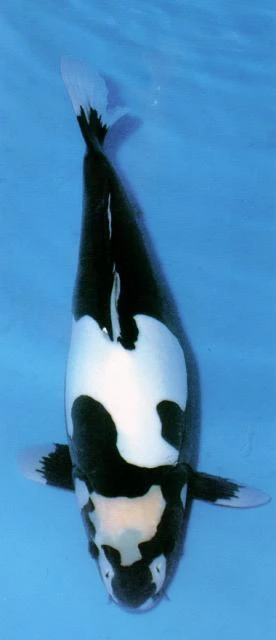
The Ginrin Shiro Utsuri The Doitsu Shiro Udsuri. Variety of the Shiro Usuri with brilliant scales of the Kinginrin type.
Doitsu variety of Shiro Utsuri.
Glossary:
Motoguro:
These are Sumi spots at the base of the pectorals. Ideally, they must represent 30% of the surface. This should appear on varieties from Karasugoi such as Showa, Shiro Utsuri, Kumonryu, Beni Kumonryus etc.
Hachiware:
Tache Sumi, which divides the head, is also called Menware. A good Hachiware goes from head to shoulders with an Inazuma shape. It's present on Shiro Utsuri, Showa the Kin Showa and other Utsuris.
Carotene:
Pigment responsible for the Hi color of Koi, when the carotene remains in the fatty layers of the fish, it may appear a dew spot on Shiroji. As Shiro Utsuri do not have Hi spots, the absorption of carotene can cause Hi spots to appear.